
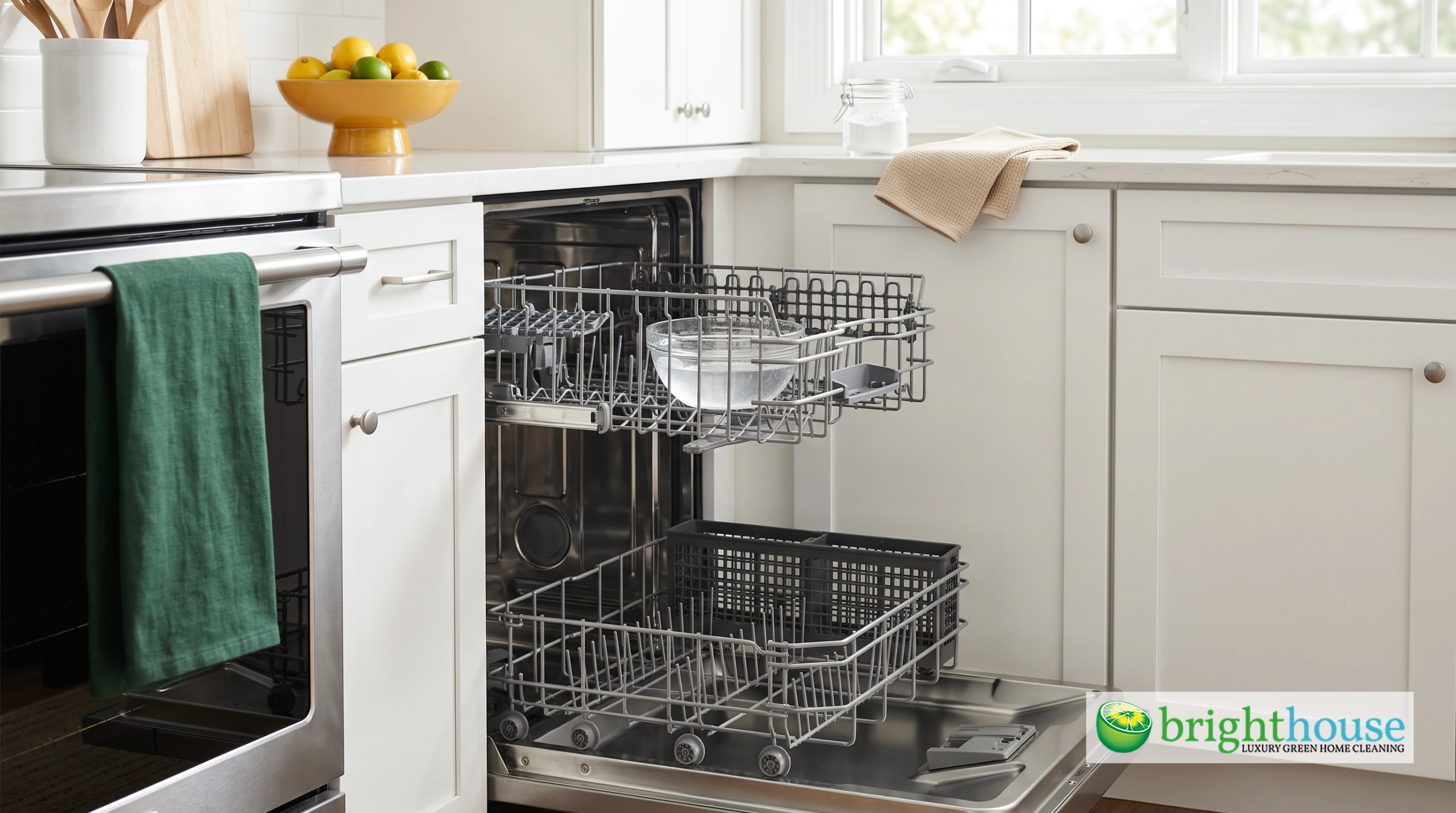
It seems like a dishwasher should clean itself. Hot water and detergent run through it every day, so how could it get dirty? But open the door on a machine that has not been cleaned in a while and you might find a cloudy film on the walls, a gray rim on the gasket, bits of food in the bottom and a smell that is hard to describe politely.
Here is the reframe: your dishes can come out looking fine while the machine itself is quietly building up grease, food and mineral scale in places the spray never reaches. That buildup eventually shows up as a smell, cloudy glasses or dishes that come out gritty. This guide shows you how to clean a dishwasher with vinegar and baking soda, which parts need a hand wipe, and how often to do it so the problem never comes back.
The Quick Answer
- Empty it and clear the bottom. Remove the racks, pick out food and rinse the filter.
- Clean the spray arms. Poke out clogged holes with a toothpick.
- Run a vinegar cycle. Set 1 cup of white vinegar in an upright, dishwasher-safe bowl on the top rack and run the hottest cycle with no detergent.
- Run a baking soda cycle. Sprinkle 1 cup of baking soda on the floor of the tub and run a short hot cycle.
- Wipe what the water misses. Clean the door gasket, door edges, handle and control panel by hand.
Do the full routine once a month. Rinse the filter every week or two if you scrape dishes lightly.
Why a Dishwasher Gets Dirty
A dishwasher sprays water up and out from its arms, then drains it through the bottom. Anything the spray does not hit directly, like the rubber door seal, the bottom edge of the door and the corners of the tub floor, collects grease and food. Meanwhile, every load leaves behind a little calcium and magnesium from your water. In homes with hard water, that mineral film turns glasses cloudy and coats the inside of the tub.
It is the same kind of scale that slows down your morning coffee brew, and vinegar dissolves it the same way.
How to Clean a Dishwasher With Vinegar and Baking Soda
This two-cycle method works on nearly every brand. Vinegar breaks down grease and mineral film. Baking soda scrubs lightly and absorbs odor. The key is running them separately. Mixed together in one cycle, they fizz, cancel each other out and do very little.
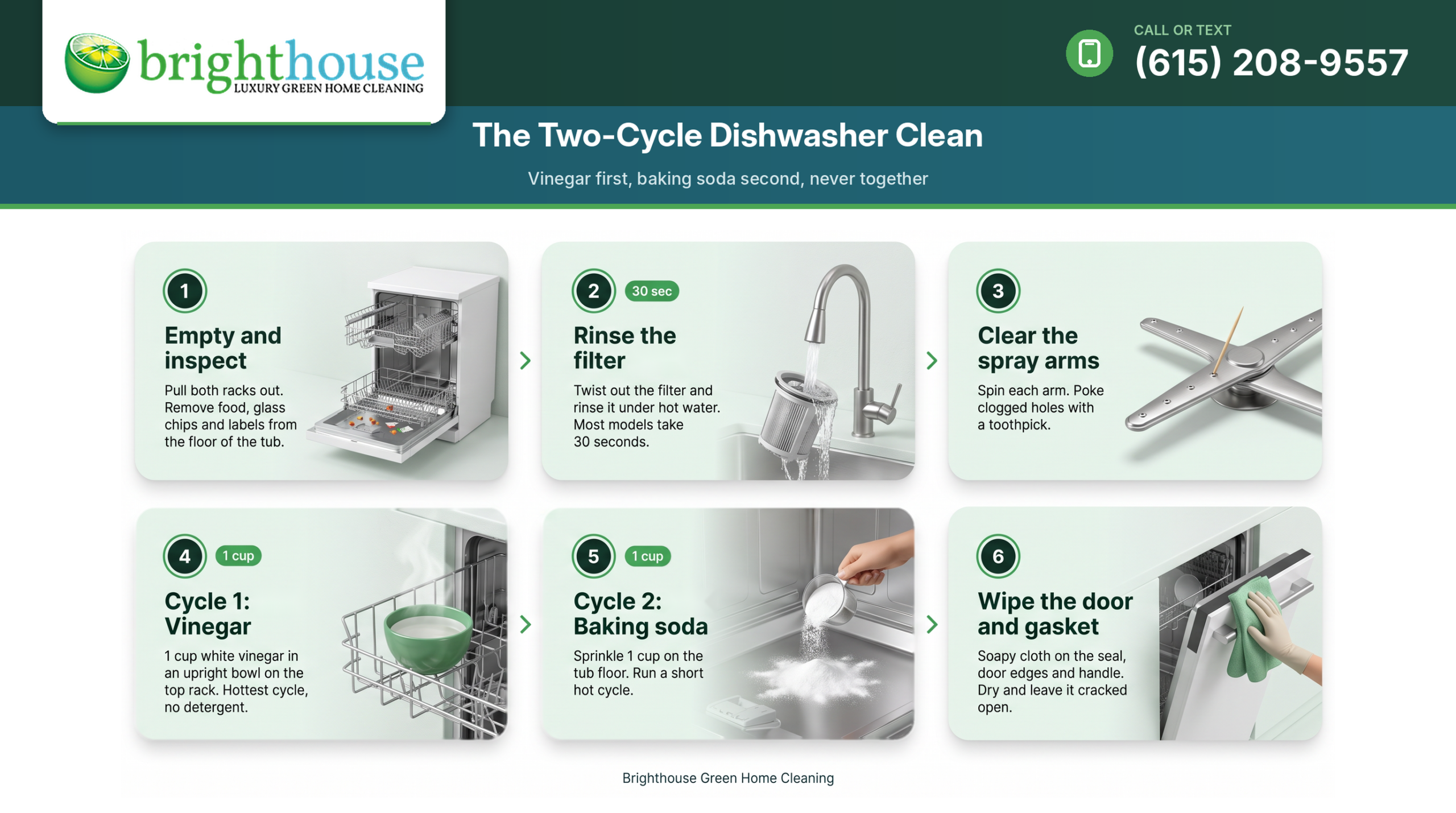
- Pull out the racks and check the floor. Look for food, broken glass, bits of label and toothpicks around the drain area. Wear gloves, since glass chips hide here.
- Rinse the filter. Most modern dishwashers have a round filter in the bottom that twists out. Rinse it under hot running water and scrub lightly with a soft brush. Twist it back until it locks.
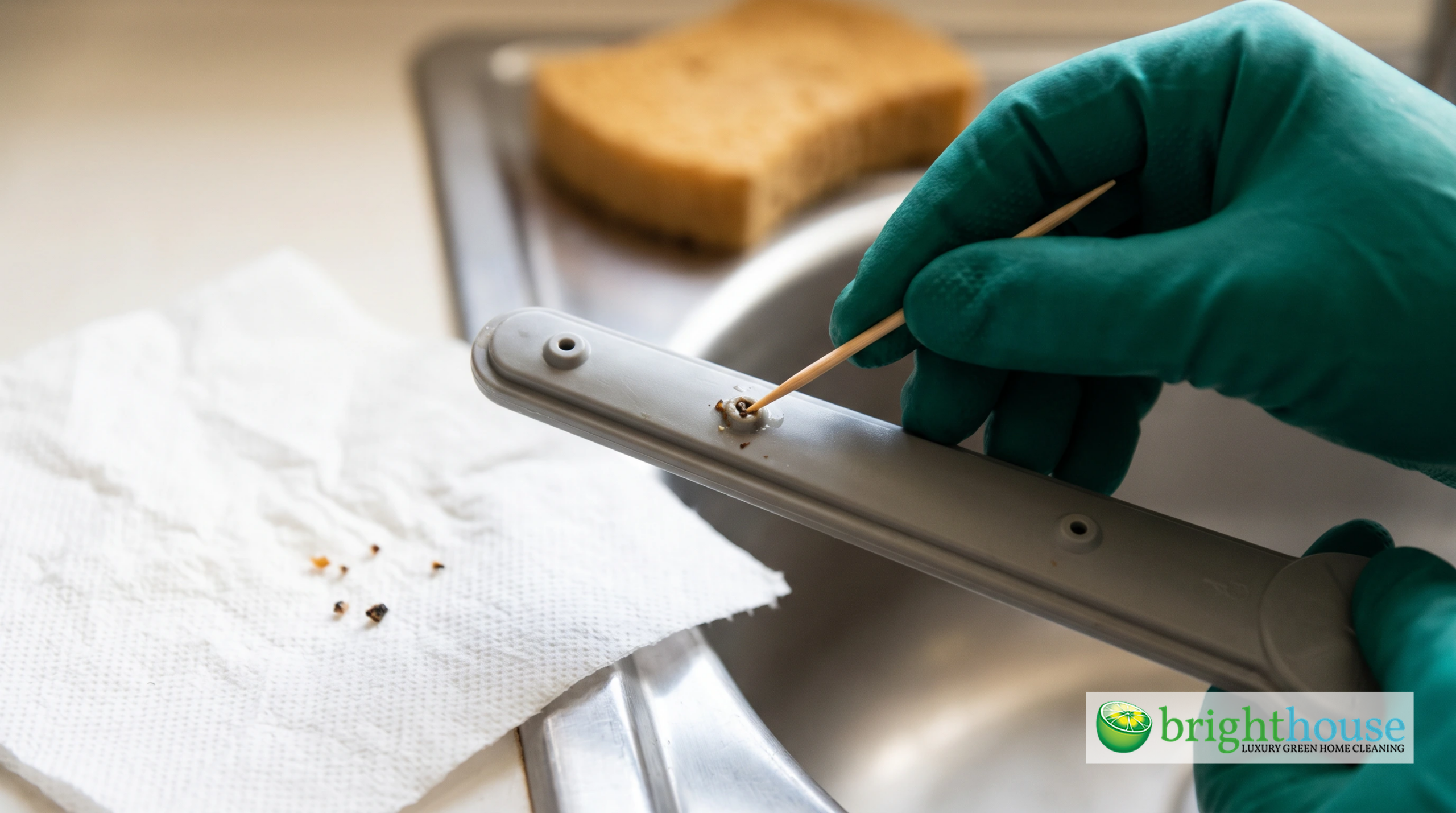
- Clean the spray arms. Spin each arm by hand to make sure it turns freely. If any holes are blocked, poke them clear with a toothpick. Many lower arms pop off for rinsing in the sink.
- Put the racks back and run the vinegar cycle. Fill a dishwasher-safe bowl or measuring cup with 1 cup of plain white vinegar and set it upright on the top rack. Run the hottest, longest cycle with no detergent and no dishes.
- Run the baking soda cycle. Once the first cycle finishes, sprinkle 1 cup of baking soda across the floor of the tub. Run a short cycle on hot.
- Hand-wipe the door and gasket. Use a soft cloth dipped in warm soapy water to wipe the rubber seal, the door edges, the bottom lip of the door and the handle. Dry everything and leave the door cracked open for an hour.
How Much Vinegar to Clean a Dishwasher
One cup is enough for a standard dishwasher. You do not need more. Pouring vinegar straight onto the tub floor drains it away in the first minutes of the cycle, which is why the upright bowl on the top rack works better. The bowl tips over during the wash and spreads the vinegar through every rinse.
How to Clean a Dishwasher Without Vinegar
Do not like vinegar, or does your manual say not to use it? You have good options. Citric acid is a strong descaler: add about 2 tablespoons to the detergent cup and run a hot empty cycle. Unsweetened lemonade drink powder works for the same reason. Commercial dishwasher cleaner tablets are also a simple choice and are often what the manufacturer recommends.
Can You Clean a Dishwasher With Bleach?
Sometimes, but only with care. Bleach is useful against mold and mildew. Before you use it, know three rules:
- Never use bleach in a stainless steel tub. Chlorine can pit and discolor stainless steel. Most newer dishwashers have stainless interiors, so check yours first.
- Never mix bleach with vinegar. Together they release chlorine gas. If you used vinegar, run a plain water cycle before any bleach. The same rule applies when you deep clean the washer in the laundry room.
- Use a small amount. In a plastic tub, place 1 cup of bleach in an upright bowl on the bottom rack and run a hot cycle. Follow with a plain rinse cycle.
For small mold spots on the gasket, a cloth with a mix of 1 tablespoon of bleach in a quart of water works without bleaching the whole machine. Rinse well.
Clean the Parts the Water Never Touches
This is where most of the grime lives. Plan on ten minutes with a cloth, an old toothbrush and warm soapy water.
The Door Gasket and Door Edges
Run a soapy cloth along the rubber seal, pulling it gently away from the frame to reach the crease. Scrub the bottom edge of the door with a toothbrush, since food and drips gather in the gap between the door and the tub. Dry it when you are done.
How to Clean the Bottom of a Dishwasher
With the bottom rack out, wipe the tub floor around the filter and drain cover with a damp cloth. Use a toothbrush for corners. If you see a hard white crust, that is mineral scale, and the vinegar cycle will soften it.
How to Clean Dishwasher Spray Arms
Spray arms have small holes that clog with seeds, eggshell and bits of plastic. Check the bottom of the arm and the tips. Many arms lift straight off or twist free, so you can rinse them under the faucet and shake out debris. Make sure they spin freely when you put them back.
The Outside, Handle and Control Panel
The handle and buttons get touched every day by every person in the house, often with food on their hands. Wipe them with a damp microfiber cloth and a drop of dish soap. For stainless steel fronts, wipe in the direction of the grain and buff dry to avoid streaks. If you are working on keeping kitchen touchpoints sanitized, add the dishwasher handle to the list.
How to Clean a Dishwasher Drain Hose and Air Gap
If water pools in the bottom after a cycle, the problem may be past the filter. Two places to check are the drain hose and, if your sink has one, the air gap.
How to Clean a Dishwasher Air Gap
An air gap is a small chrome or plastic cap on the back of your sink, near the faucet. It keeps dirty sink water from flowing back into the dishwasher. When it clogs, water may spit out of it during a cycle. Pull or twist off the cap, remove the inner plastic cover and use a bottle brush or paper towel to clear out gunk. Run hot water through it and snap the cover back on.
How to Clean a Dishwasher Drain Hose Without Removing It
Start simple. Under the sink, make sure the hose is not kinked or crushed behind stored items. If the hose connects to a garbage disposal, run the disposal first, since a full disposal can back up into the dishwasher. Then pour a mix of 1/2 cup baking soda and 1 cup white vinegar into the drain area in the bottom of the dishwasher, let it fizz for 15 minutes, and follow with a few cups of very hot water before running a rinse cycle. If water still will not drain, the hose may need to be removed and flushed, a job that often calls for a plumber or appliance tech.
One more tip: if you recently installed a new garbage disposal and the dishwasher stopped draining, the knockout plug inside the disposal’s dishwasher inlet may never have been removed. That is a common, easy fix for whoever installed it.
Fixing Smells, Cloudy Glasses and Mold
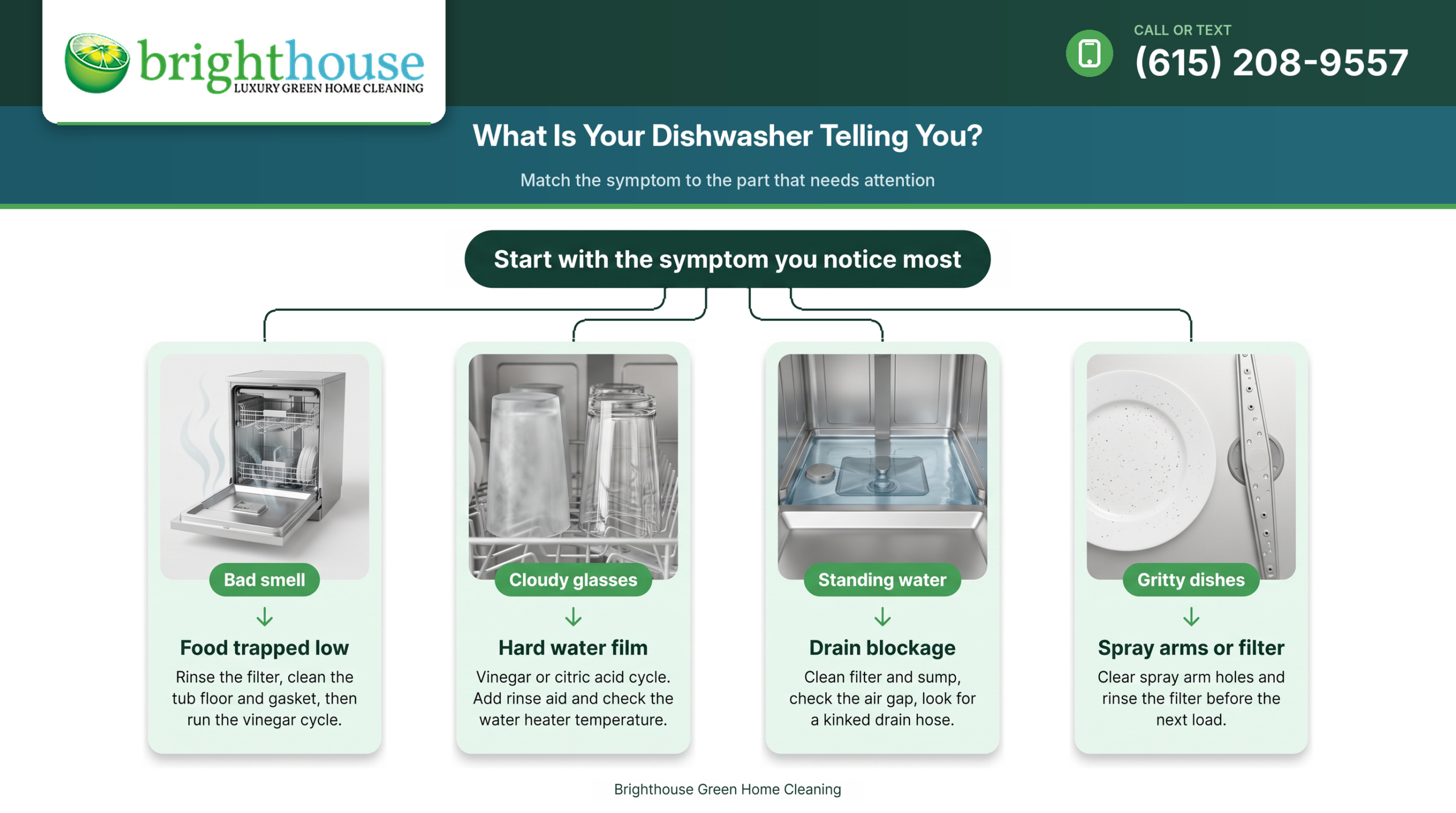
| Problem | Likely Cause | Fix |
|---|---|---|
| Stinky dishwasher | Food in the filter, sump or gasket | Rinse the filter, wipe the gasket, run the vinegar then baking soda cycles |
| Cloudy glasses, white film | Hard water minerals | Vinegar or citric acid cycle; add rinse aid; consider a detergent with built-in rinse aid |
| Black spots on the gasket | Mold or mildew | Wipe with dilute bleach or vinegar, dry, leave the door ajar between loads |
| Water left in the bottom | Clogged filter, air gap or drain hose | Clean the filter, check the air gap and hose, run the disposal |
| Gritty or spotted dishes | Blocked spray arms or a dirty filter | Clear spray arm holes and rinse the filter |
| Rust spots in the tub | Chipped rack coating or bleach in a stainless tub | Touch up racks with rack repair paint; stop using bleach |
If a symptom continues after a full cleaning, check your manual’s troubleshooting section or call an appliance technician.
How to Clean Mold Out of a Dishwasher
Mold usually grows in the gasket, under the bottom edge of the door and around the filter housing. Wear gloves. Scrub those areas with warm soapy water and a toothbrush, wipe with a vinegar-dampened cloth or the mild bleach mix if your tub is plastic, then run the full vinegar cycle. Leave the door open a crack after every load for a few weeks to let it dry out. In humid Middle Tennessee summers, that small habit makes a big difference.
How to Clean Hard Water From a Dishwasher
If you see a white haze on the tub walls and your glasses, run the vinegar cycle twice in a row, or use citric acid. Keep the rinse aid dispenser full, since it helps water sheet off instead of drying into spots. Running your kitchen tap until the water is hot before starting the dishwasher also helps the first fill clean better.
Brand Notes: Maytag, LG and Self-Clean Cycles
Many newer dishwashers have a Clean or Machine Clean cycle. It runs extra hot and long to clear residue. You usually start it with an empty machine and either nothing in the detergent cup or a cleaner tablet, depending on the manual.
How to Clean a Maytag Dishwasher
Many Maytag models have a removable dual filter in the bottom that twists out. Rinse it monthly. Some older Maytags use a self-cleaning hard food disposer instead and have no filter to remove. Maytag’s manuals often recommend a cleaner tablet like affresh in an empty machine on the hottest cycle. The vinegar and baking soda method also works for routine care.
How to Clean an LG Dishwasher
LG dishwashers usually have a Machine Clean cycle. Remove the dishes, add a cleaner if the manual suggests one, and start the cycle. Rinse the filter and check the spray arms before you run it for the best results.
How Often to Clean a Dishwasher
| Task | How Often |
|---|---|
| Scrape plates and check the floor for food | Every load |
| Rinse the filter | Every 1 to 2 weeks, or monthly if you pre-rinse |
| Wipe the gasket, door edge and handle | Weekly |
| Vinegar and baking soda cycles | Monthly |
| Check the air gap and drain hose | Every few months, or when water pools |
A spotless dishwasher is one small part of a clean kitchen. If counters, floors and appliances keep piling up, Brighthouse’s cleaning services for your home cover the whole kitchen with eco-friendly products, and our residential cleaning services team works across Nashville, Brentwood and Franklin.
For Short-Term Rental Hosts
Guests run the dishwasher and walk away, and the next guest opens it to a smell. Experienced cleaners for short term rentals can empty it, check the filter and wipe the gasket at every turnover, so it never gets to that point. If you host in the Nashville area, local short term rental cleaners can add these checks to every visit.
Frequently Asked Questions
How do I clean my dishwasher with vinegar?
Place 1 cup of white vinegar in an upright, dishwasher-safe bowl on the top rack and run the hottest cycle with no dishes or detergent. Follow with a short hot cycle using 1 cup of baking soda on the tub floor.
Can I mix vinegar and baking soda in my dishwasher?
Not in the same cycle. They neutralize each other. Run vinegar first and baking soda second.
How often should you clean a dishwasher?
Run a full cleaning once a month and rinse the filter every week or two.
Why does my dishwasher smell?
Trapped food in the filter, sump or door gasket is the usual cause. Clean those areas and run the vinegar and baking soda cycles.
Can I put bleach in my dishwasher?
Only in a plastic tub, never in stainless steel, and never in a machine that still has vinegar in it. Use 1 cup in a bowl and follow with a rinse cycle.
How do I run a cleaning cycle on my dishwasher?
If your model has a Clean or Machine Clean button, empty the machine, add a cleaner if your manual says to, and start the cycle. If it does not, use the vinegar method on the hottest normal cycle.
The Bottom Line
A dishwasher can wash your dishes well while the machine itself slowly gets grimy. A monthly vinegar cycle, a baking soda cycle and ten minutes with a cloth on the gasket and door keep it clean, fresh and working the way it should.
Tonight, after the last load comes out, pull the bottom rack, rinse the filter and set a cup of vinegar on the top rack before bed. You will open a fresher machine in the morning.
It is a small job that makes every load a little better.


