

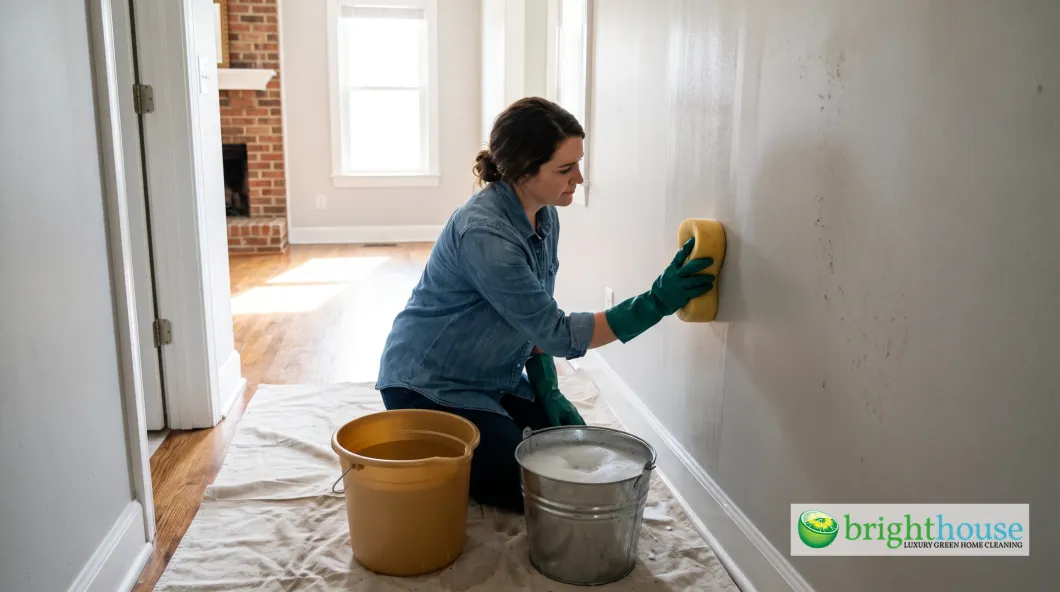
Walls get dirty slowly, so you rarely notice until the light hits them just right. Then you see it all: handprints by the light switch, scuffs along the hallway, a gray haze in the kitchen and something a toddler drew at exactly knee height.
The hard part about learning how to clean walls is that the wrong method can make things worse. Scrub too hard and you leave a shiny patch that looks dirtier than the smudge did. Use the wrong cleaner and you can lift the color right off. The good news is that one detail tells you most of what matters before you start: the paint’s sheen. This guide shows you how to read it, how to wash a whole wall without streaks, and how to handle the tough stuff like soot, smoke and mold.
The Quick Answer
- Start dry. Dust or vacuum the wall first.
- Use the mildest mix. Warm water and a few drops of dish soap handle most dirt.
- Match your pressure to the sheen. Flat and matte paint need a light touch. Semi-gloss and gloss can take more.
- Test first. Try any method on a hidden spot before you do a whole wall.
- Wash bottom up, rinse top down. This keeps drips from leaving streaks.
- Spot-treat stains last. Use the gentlest fix that works for each kind of mark.
Why Paint Sheen Decides How You Clean
Sheen is how shiny the paint is. Flat and matte paints have almost no shine, which hides wall flaws beautifully but also means the surface is softer and more porous. Rub a flat wall hard and you polish it, leaving a shiny spot called burnishing. Glossier paints dry harder and smoother, so dirt sits on top and wipes away.
Not sure what you have? Look at the wall at an angle near a window. A flat wall looks chalky with no glare. Eggshell has a soft glow. Satin looks smooth and a bit pearly. Semi-gloss and gloss clearly reflect light. In most homes, ceilings are flat, main walls are eggshell or satin, and trim and doors are semi-gloss.

How to Clean Matte Painted Walls
Matte walls need the lightest touch of all. Dust them with a dry microfiber mop or a clean, soft cloth. For smudges, use a sponge dipped in plain warm water and wrung out until it is nearly dry. Dab or wipe gently in one direction. Skip melamine sponges like Magic Eraser, which act like very fine sandpaper and are one of the most common causes of shiny patches on flat paint. If a mark will not come off without scrubbing, a small touch-up with leftover paint often looks better than a scrubbed spot.
How to Clean Walls Without Damaging Paint, Step by Step
Here is the method for washing a full wall or a whole room. Plan on about 20 to 30 minutes per wall, less if you are just doing the high-traffic areas.
- Clear and protect. Move furniture away and lay a towel along the baseboard. Keep the sponge well wrung near outlets and light switches.
- Dust the wall. Use a vacuum with a brush attachment, a dry microfiber mop or a duster on a pole. Cobwebs gather in the top corners.
- Mix two buckets. Fill one with a gallon of warm water and a few drops of dish soap. Fill the other with plain warm water for rinsing.
- Test a hidden spot. Wash a small area behind a couch or inside a closet. Let it dry and check for shine or color change.
- Wash from the bottom up. Wring the sponge well. Work in small sections with gentle circles, starting near the floor. If drips run down, they land on wall you have already cleaned, where they wipe off easily instead of drying into streaks on dirty paint.
- Rinse from the top down. Use a fresh sponge from the plain water bucket to remove any soap film.
- Dry it. Pat damp areas with a clean towel, especially on flat paint.
Do the baseboards last, since dirty water always finds its way down. A damp microfiber cloth and a soft brush for the top edge usually do the trick.
How to Clean Very Dirty Walls
If plain soap and water are not enough, as in a rental move-out or a wall that has not been washed in years, add a splash of white vinegar to the soapy bucket, about 1/4 cup per gallon. On semi-gloss or gloss surfaces in a kitchen, a gentle degreaser made for painted surfaces can help. Always test first, and always rinse.
How to Clean Walls for Painting
Fresh paint will not stick well to grease or dust. Before you paint, wash the walls with warm soapy water, rinse well and let them dry overnight. Kitchens and bathrooms may need a degreaser. Many painters use a TSP substitute, a cleaner sold in paint aisles. Wear gloves, follow the label and rinse with clean water.
How to Remove Marks and Stains From Walls
Spot cleaning is where most people get into trouble. The rule is simple: start with the mildest option and move up only if you need to.
| Mark | Try First | If That Fails | Notes |
|---|---|---|---|
| Scuff marks | A clean white eraser or a tennis ball rubbed gently | Damp sponge with a dab of dish soap | Melamine sponge only on semi-gloss or gloss |
| Pencil | White art eraser | Damp sponge with dish soap | Rub lightly in one direction |
| Crayon | Warm with a hair dryer, then wipe with a soft cloth | A dab of baking soda on a damp cloth | Test baking soda on flat paint first |
| Grease near the stove | Warm water with a few drops of dish soap | 1 part vinegar to 2 parts water | Rinse well so it does not stay sticky |
| Candle wax | Ice to harden, then lift with a plastic card | Brown paper bag and a warm iron | Clean the oily ring with soapy water |
| Permanent marker | Cotton ball with rubbing alcohol, dabbed | Repeat with fresh cotton | Can soften some paints, so test |
| Fingerprints at switches | Damp microfiber with a drop of soap | Repeat, do not scrub | Clean switch plates while you are there |
Always test on a hidden area and let it dry. Some marks look worse wet and fine once dry.
If you have a wall-mounted TV, wipe the wall around it while you are at it, and give the screen itself a gentler routine with a dry microfiber cloth. Wall cleaners do not belong on a TV.
How to Clean Textured, Brick and Paneled Walls
How to Clean Textured Walls
Orange peel, knockdown and popcorn textures trap dust in every little bump, and a sponge tends to snag and crumble. Vacuum first with a soft brush attachment. Then dab, do not wipe, using a soft sponge or a microfiber cloth that is barely damp. A soft-bristled brush with soapy water helps on heavier textures. Never soak textured drywall, and be very gentle on popcorn ceilings, which can be fragile. In homes built before the 1980s, popcorn texture may contain asbestos, so do not scrape or sand it.
How to Clean Brick Walls Inside the House
Interior brick holds dust and soot in its pores. Vacuum it with a brush attachment, then scrub with a stiff nylon brush and warm water with a little dish soap. For heavy grime, a paste of dish soap and baking soda works well. Rinse with a damp sponge and let it dry fully. Avoid wire brushes, which can scratch brick and leave metal bits that rust.
Wood Paneling and Plaster
Wood paneling usually has a finish on top, so a damp cloth with a drop of mild soap, followed by a dry cloth, keeps it looking good. Skip soaking it. Old plaster is durable but porous, so treat it like flat paint: gentle, barely damp, and dry right away.
How to Clean Smoke and Soot Off Walls
Soot from candles, a fireplace or a small kitchen fire is oily and fine. Here is the surprise: water makes it worse. Wet soot smears into the paint and spreads. Always start dry.
- Vacuum loose soot. Use a brush attachment and hold it just off the surface.
- Use a dry soot sponge. These dry chemical sponges, sold at hardware stores, lift soot without water. Wipe in long, single strokes, and turn the sponge to a clean side often.
- Then wash. Once most of the soot is gone, wash with warm water and dish soap or a degreaser made for painted walls. Rinse.
- Prime if needed. Some smoke stains bleed through no matter what. A stain-blocking primer before repainting stops that.

How to Clean Cigarette Smoke Off Walls
Nicotine leaves a sticky yellow-brown film that soap alone struggles with. Mix 1 part white vinegar to 1 part warm water, or use a degreaser or TSP substitute as directed. Wash a small section at a time, rinse with clean water and dry. Expect to go over heavily stained walls two or three times. If the odor stays, the walls usually need a sealing primer before painting.
How to Clean Mold Off Walls
Small spots of mold in a bathroom or on a cool exterior wall are common in our humid summers. You can usually handle a small patch yourself. The EPA’s general guidance is that areas under about 10 square feet, roughly a 3-by-3-foot patch, can be cleaned by a homeowner. Larger areas, mold that keeps coming back or mold after a leak or flood call for a professional.
- Protect yourself. Wear gloves, eye protection and an N95 mask, and open a window or run a fan.
- Scrub with detergent and water. Use a soft brush or sponge with warm water and dish soap on painted surfaces.
- Dry it completely. Mold needs moisture. Use a fan or dehumidifier until the wall is fully dry.
- Fix the moisture source. Run the bathroom fan during and after showers, repair leaks and keep indoor humidity under about 50%.
Drywall is porous. If mold has stained deep into it or the wall feels soft, cleaning the surface will not fix it, and that section usually needs to be cut out and replaced. Our guide on handling mold and mildew in a humid climate covers prevention in more depth.
How to Clean Mold in Basement Walls
Unpainted concrete or block basement walls can handle a stronger scrub. Use a stiff brush with detergent and water. On bare concrete, some people use 1 cup of bleach per gallon of water, with good airflow and gloves. Never mix bleach with ammonia or vinegar. White, crusty powder on basement walls is often efflorescence, salt left behind by water moving through the masonry, not mold. Either way, it is a sign of moisture, so look at grading, gutters and sealing.
How to Clean Bathroom Walls
Bathroom walls are usually semi-gloss, so they handle soap and water well. Wipe them down monthly with warm soapy water, paying attention to the area above the shower and behind the toilet. After every shower, run the exhaust fan for at least 20 minutes to keep mildew from forming.
After a Renovation: Drywall Dust
Drywall dust is ultra-fine and clings to every surface. Vacuum walls first with a HEPA vacuum and a brush attachment, then wipe with a barely damp microfiber cloth, rinsing it often. Too much water turns the dust into a paste. Our post on cleaning up after a renovation covers the rest of the house.
Washing every wall in a house is a big job, and it is the kind of task that slides for years. If you would rather hand it off, a local home cleaning company like Brighthouse can fold walls, baseboards and switch plates into a deep clean anywhere in the Nashville, Brentwood and Franklin area. With professional home cleaning on a regular schedule, scuffs and smudges get handled before they build up.
For Rental Hosts
Scuffs by the door and fingerprints by the switches show up in guest photos and reviews. Hosts who search “hire Airbnb cleaner” are usually looking for exactly this: someone who spot-cleans walls and trim between stays. A dedicated short term rental cleaner keeps it consistent from one booking to the next.
Frequently Asked Questions
What is the best thing to clean walls with?
Warm water and a few drops of dish soap on a soft sponge. It is gentle on paint and handles most everyday dirt.
How do you clean walls without ruining the paint?
Dust first, use mild soap and water, wring the sponge well, test a hidden area and use light pressure on flat or matte paint.
Can I use a Magic Eraser on painted walls?
On semi-gloss and gloss, carefully. On flat, matte and eggshell paint, it often leaves a shiny spot, so try a white eraser or a damp sponge first.
How do you get soot off walls?
Vacuum loose soot, then use a dry soot sponge before any water. Wash with soap and water only after most of the soot is gone.
Does vinegar clean walls?
Yes. About 1/4 cup per gallon of warm soapy water helps with grime and grease. Rinse afterward, and test on flat paint first.
Should I wash walls from the top down or bottom up?
Wash from the bottom up so drips land on clean wall, then rinse from the top down.
The Bottom Line
Cleaning walls comes down to matching your method to your paint. Flat and matte paint get a light, barely damp touch. Eggshell and satin handle soap and water. Semi-gloss and gloss can take a little scrubbing. Dust first, test first, and work up from the gentlest fix.
Start with one hallway this weekend. Look at the wall in daylight, figure out the sheen, and try the two-bucket method on one section. You will know within ten minutes whether the rest of the room needs it.
Clean walls make a room feel brighter, even when nothing else has changed.


