
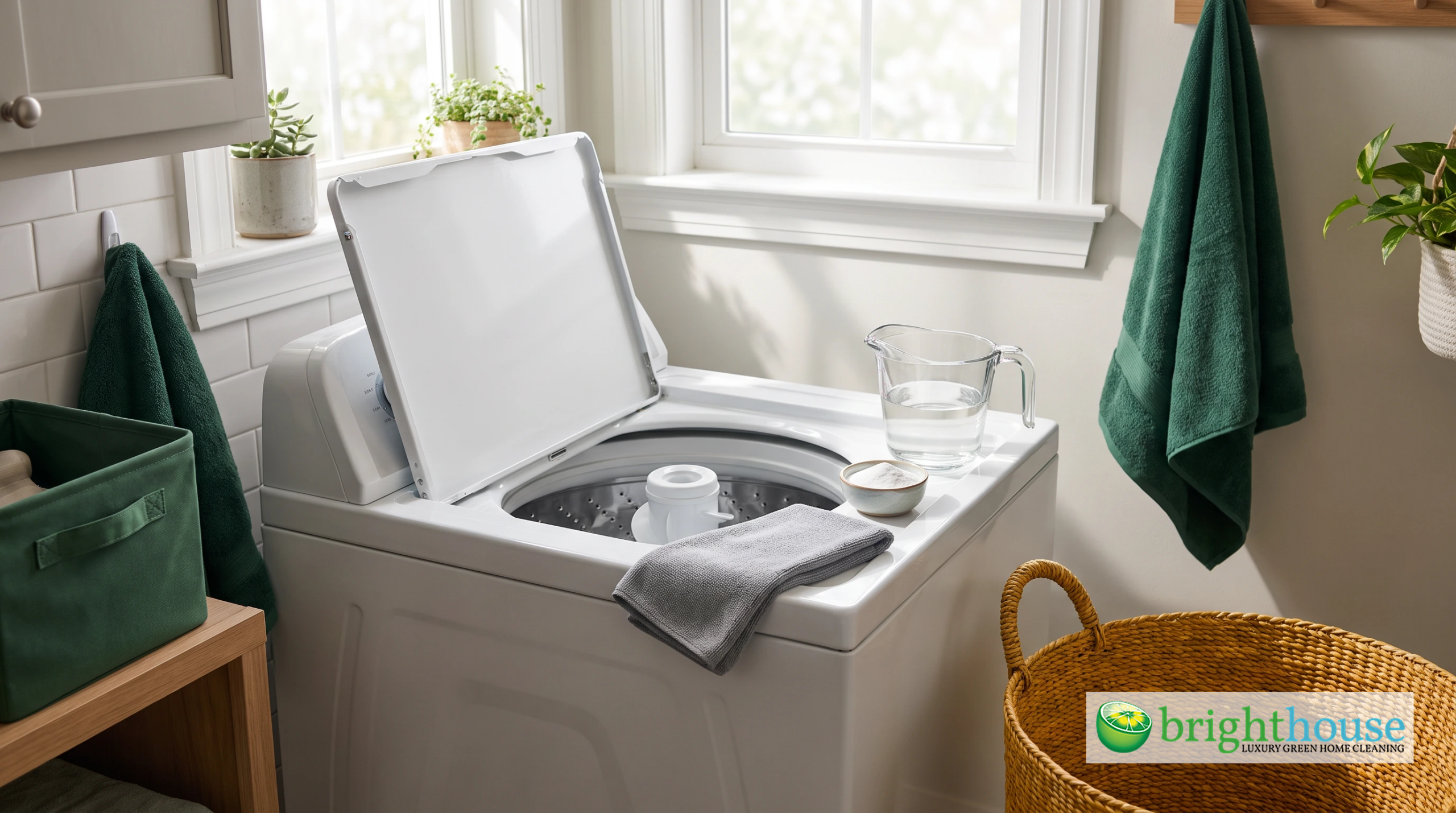
You wash your clothes in it every week, so it feels strange that the washer itself could be dirty. But open the lid on a machine that has gone a few months without attention and you may catch it: a sour, swampy smell that clings to towels even after they come out of the dryer.
The fix is simple, and it costs a few dollars. The catch is that most advice online tells you to throw vinegar, bleach and baking soda at the problem all at once. That is the one move you should never make. This guide shows you how to clean a washing machine the right way, with one cleaner per cycle, the right amount for your machine, and a short hunt for the spot where the smell actually lives.
The steps below focus on top-loading washers, both the classic kind with a center agitator and newer high-efficiency (HE) models. If your machine loads from the front, the drum cycle works the same way, but the rubber door seal needs its own routine.
The Quick Answer: One Cleaner, Hot Water, Then a Rinse
If you only read one section, read this one. Here is the short version of how to clean your washing machine:
- Pick one cleaner. Use white vinegar for soap and mineral buildup, or chlorine bleach for mildew and odor. Do not use both in the same cycle.
- Run the hottest, largest, longest cycle. Hot water does half the work. A full tub reaches the scum line near the top.
- Let it soak. If your machine lets you pause, give the mix about an hour to sit in the tub.
- Scrub what the water misses. Dispensers, the underside of the lid and the top rim of the tub hold most of the grime.
- Rinse and dry. Run one more plain cycle, then leave the lid open so the inside can dry.
Do this once a month and most washers never develop a smell in the first place.
Why You Should Never Mix Vinegar and Bleach
Vinegar is an acid. Bleach contains sodium hypochlorite. When the two meet, they release chlorine gas, which can burn your eyes, throat and lungs even in small amounts. A closed washer tub, a laundry closet with no window and a curious kid or pet are a bad combination.
This is why the “dump everything in” method is risky. Some tutorials have you run a bleach cycle and then a vinegar cycle back to back. That can work, but only if a full plain-water rinse cycle runs in between so no bleach is left in the tub or hoses. If you are not sure the machine is fully rinsed, wait until the next day.
Baking soda is different. It is a mild base, it does not react dangerously with either cleaner, and it is safe to use in a separate rinse cycle to scrub and deodorize.
How to Clean a Top-Loading Washing Machine With Vinegar
Vinegar is the go-to choice when your clothes come out stiff, your detergent seems weaker than it used to, or you see a gray film around the tub. It breaks down leftover soap and the mineral scale that hard water leaves behind.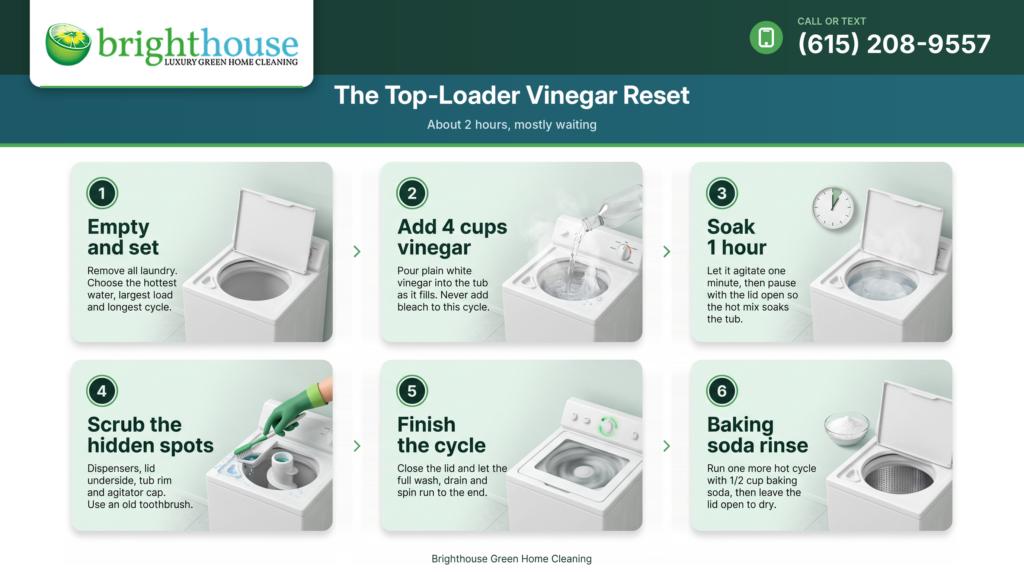
- Empty the tub. Take out every sock and pull any lint from around the rim.
- Set the machine. Choose the hottest water, the largest load size and the longest cycle your washer offers.
- Add vinegar as it fills. Pour about 4 cups (1 quart) of plain white distilled vinegar straight into the tub. Do not add detergent.
- Agitate, then pause. Let it run for about a minute so the vinegar mixes in, then pause the cycle and leave it to soak for an hour. If your washer locks the lid or will not pause, just let the cycle run.
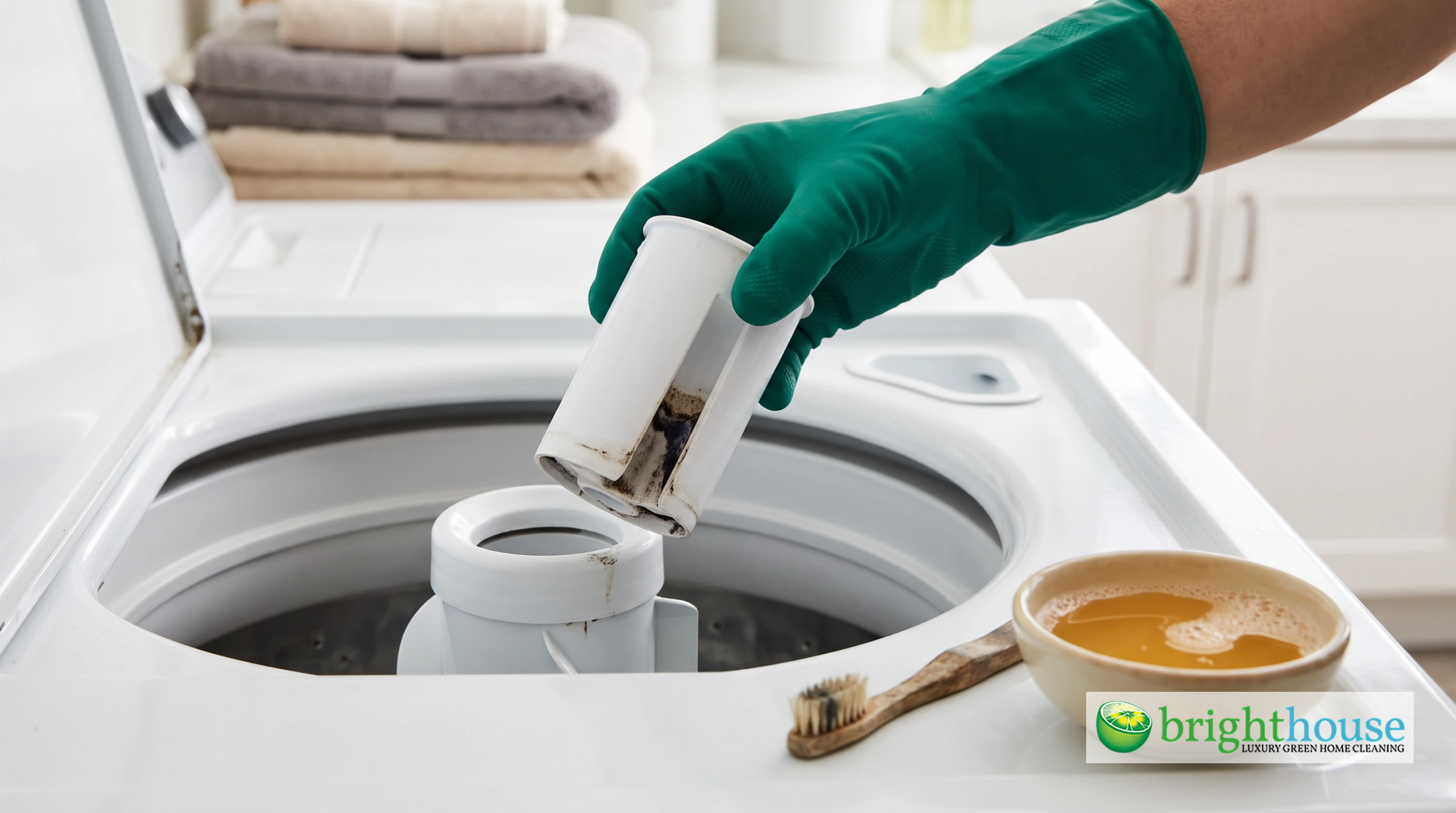
- Scrub while it soaks. Dip an old toothbrush in the tub water and scrub the fabric softener and bleach dispensers, the lid hinge area, the underside of the lid and the top rim of the tub. Pull out removable dispensers and soak them in a bowl of hot water and vinegar.
- Finish the cycle. Close the lid and let the wash, drain and spin finish.
- Run a baking soda rinse. Sprinkle about 1/2 cup of baking soda into the empty tub and run one more hot cycle. This loosens anything the vinegar softened and leaves the drum smelling neutral.
- Wipe and air it out. Wipe the tub walls and the outside of the machine with a damp microfiber cloth. Leave the lid open for a few hours.
How Much Vinegar to Clean a Washing Machine
The right amount depends on how much water your machine holds. A big agitator top-loader fills deep, so it needs more. An HE washer uses far less water and can be cleaned with less.
| Washer Type | Vinegar | Bleach | Notes |
|---|---|---|---|
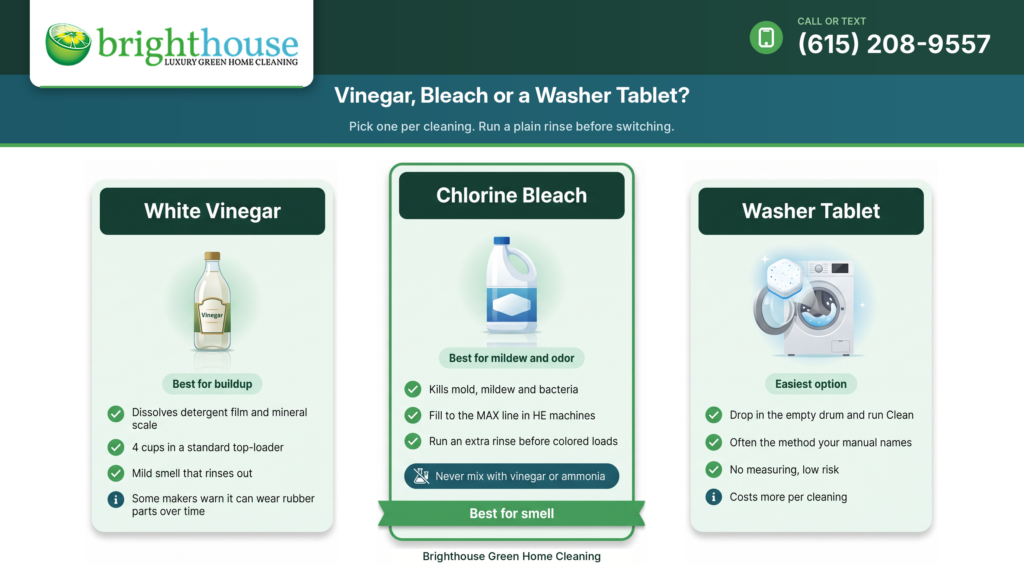
| Standard top-loader with agitator | About 4 cups, poured into the tub | About 4 cups, poured into the tub | Hottest, largest, longest cycle |
| High-efficiency (HE) top-loader | About 2 cups in the drum | Fill the bleach dispenser to the MAX line | Use the Clean Washer or Tub Clean cycle if you have one |
| Front-loader | About 2 cups in the drum | Fill the bleach dispenser to the MAX line | Clean the door seal separately |
| Any machine with a tablet cleaner | Not needed | Not needed | Follow the package and your manual |
General guidelines only. Your owner’s manual overrides these amounts, and some manufacturers ask you not to use vinegar at all.
How to Clean a Washing Machine With Bleach
Bleach is the better pick when the problem is a smell, black specks on clothes, or visible mildew. It kills the mold and bacteria that vinegar mostly leaves alone. Before you start, check your manual to confirm bleach is allowed.
- Start with an empty, rinsed tub. If you used vinegar recently, run a plain hot cycle first.
- Add the bleach. In a standard top-loader, add about 4 cups of regular chlorine bleach as the tub fills. In an HE machine, pour bleach into the bleach dispenser only up to the MAX line.
- Run the hottest, longest cycle. Pause for an hour of soaking if your machine allows it.
- Rinse twice. Run at least one extra plain rinse so no bleach reaches your next load of darks.
- Wipe the parts the water missed. Mix 1/4 cup of bleach into a quart of water, put on gloves, and wipe the lid, rim and dispensers. Rinse them with a clean damp cloth.
Open a window or run a fan while you work. Bleach fumes build up fast in small laundry closets.
Running Tub Clean on an LG or Other HE Washer
Many newer washers, including LG, Samsung, Whirlpool and others, have a built-in cycle called Tub Clean, Clean Washer or Self Clean. On most models you start with an empty drum, add bleach to the dispenser up to the MAX line or drop in a washer cleaning tablet, and press the cycle button. It usually takes one to two hours. Some machines remind you with a light or a message after a set number of washes. When that reminder shows up, run the cycle the same day and the smell rarely gets a foothold.
Find Where the Smell Is Coming From
Here is the part most guides skip. If your washer still smells after a cleaning cycle, the drum was never the real problem. The odor usually lives in a spot that hot water does not reach. Work through this list in order.
| Where It Hides | What You Will Notice | What to Do |
|---|---|---|
| Fabric softener and detergent dispensers | Black or slimy gunk in the cups | Remove and soak in hot vinegar water, scrub with a toothbrush |
| Underside of the lid and tub rim | Gray film or dark speckles | Wipe with diluted bleach or vinegar, then dry |
| Under the agitator cap | Musty smell from the center column | Pop off the cap if your manual says it is removable and scrub inside |
| Lint or pump filter | Slow draining, standing water, sour smell | Find it in your manual, empty it and rinse it |
| Drain standpipe in the wall | Sewer smell even when the washer is clean | Pour a bucket of water down it; if the smell stays, call a plumber |
| Too much detergent | Suds left after rinse, sticky drum | Use the measured line, and HE detergent in HE machines |
Most washer odors come from soap residue that feeds mildew. Using less detergent and drying the tub stops the cycle.
How to Clean a Washing Machine Filter on a Top Loader
Not every top-loader has a filter you can reach. Older machines often hide a lint filter inside the agitator or along the top rim of the tub. Some models have a coin trap or drain pump filter behind a small panel at the bottom front. Many newer top-loaders have self-cleaning pump filters and nothing to remove at all.
Search your model number plus “filter” to find out. If you do have one, put a shallow pan and an old towel down first, since water will come out. Pull the filter, rinse lint and hair under the faucet, scrub it with a soft brush and put it back snugly.
Cleaning the Agitator
The tall post in the middle of a classic top-loader can trap a surprising amount of gunk. On many models the top cap pulls off, and the upper section lifts out once you remove a bolt underneath. Only take it apart if your manual shows how. If you cannot remove it, scrub around the fins and seams with a toothbrush dipped in the hot vinegar or bleach water during the soak.
How Often to Clean a Washing Machine
For most households, once a month is the sweet spot. Clean it more often if any of these apply to you:
- You wash mostly in cold water, which leaves more soap behind
- You use liquid fabric softener in every load
- You wash pet bedding, cloth diapers or gym clothes often
- Your laundry room stays humid, which is common in Middle Tennessee summers
- You run a short-term rental and wash sheets and towels several times a week
Humidity matters more than people expect. Mold loves a warm, damp, closed space, and a washer with its lid shut is exactly that. If you have fought mildew problems in a humid Nashville house before, you already know the rule: dry air wins.
| Task | How Often | Time |
|---|---|---|
| Leave the lid open after each wash | Every load | 0 minutes |
| Wipe the rim and lid underside | Weekly | 2 minutes |
| Rinse dispensers | Every 2 weeks | 5 minutes |
| Full vinegar or bleach cycle | Monthly | About 2 hours, mostly hands-off |
| Check the filter, if your model has one | Every 1 to 3 months | 10 minutes |
How to Clean a Washing Machine and Dryer Together
Since you are already in the laundry room, give the dryer ten minutes while the washer soaks. Pull the lint screen and wash it in warm soapy water with a soft brush. Dryer sheets leave a waxy coating you cannot see that slows airflow. Let it dry fully before you slide it back. Then wipe the dryer drum with a damp cloth to pick up any dye or melted crayon marks, and vacuum the lint slot with a narrow attachment.
A clean lint screen helps your dryer run faster, but the bigger fire risk sits in the vent duct behind the machine. That job is worth putting on your calendar about once a year.
Habits That Keep the Smell From Coming Back
- Use less detergent. More soap does not mean cleaner clothes. Extra soap is food for mildew. Follow the fill line on the cap.
- Use HE detergent in HE machines. Regular detergent makes too many suds for low-water washers and leaves residue.
- Move wet laundry right away. A load that sits overnight starts to sour, and so does the tub.
- Leave the lid open. Let air in between loads, as long as kids and pets cannot climb in.
- Skip liquid softener sometimes. Wool dryer balls or a half cup of vinegar in the rinse cycle soften clothes with less buildup.
If laundry is just one of the chores that never seems to end, regular home cleaning can take the rest of the house off your plate so you only have to think about the wash. Brighthouse offers housekeeping support across the Nashville, Brentwood and Franklin area, using eco-friendly products that are easy on your family and your machines.
For Short-Term Rental Hosts
Rental linens get washed far more than a family’s sheets do, and guests notice a musty towel right away. Many hosts set a recurring reminder to run a cleaning cycle every two weeks instead of monthly. If keeping up with laundry between bookings is wearing you down, experienced short term rental cleaners can handle the turnover, linens included, so every stay starts with fresh-smelling towels. Brighthouse also offers professional rental property cleaners for hosts in Nashville, Brentwood and Franklin.
Frequently Asked Questions
How much vinegar does it take to clean a washing machine?
About 4 cups for a standard top-loader and about 2 cups for a high-efficiency or front-load washer. Pour it straight into the drum and run the hottest, longest cycle.
Can I clean my washer with bleach and vinegar at the same time?
No. Mixing them releases chlorine gas. Use one per cleaning, and run a full plain rinse cycle before you switch to the other.
How often should I clean my washing machine?
Once a month for most homes. Clean it every two weeks if you wash heavy loads, use cold water most of the time, or live with high humidity.
Why does my washer still smell after I cleaned it?
The odor is probably coming from the dispensers, the filter, the area under the agitator cap or the drain standpipe. Check each one before running another cycle.
Can I clean a washing machine with baking soda?
Yes. A half cup of baking soda in a hot, empty cycle scrubs lightly and removes odors. It works best as a rinse after a vinegar or bleach cycle.
Is vinegar bad for my washing machine?
Used once a month it is fine for most machines. Some manufacturers warn that frequent, heavy vinegar use can wear rubber seals and hoses, so check your manual and use bleach or a tablet if it says to.
The Bottom Line
Cleaning a washing machine is not hard. It comes down to one cleaner per cycle, hot water, a soak, and a few minutes with a toothbrush on the parts the water misses. If a smell sticks around after that, the drum is not the culprit. The dispensers, the filter or the drain usually are.
Pick a day this week, run a vinegar cycle if you see buildup or a bleach cycle if you smell mildew, and set a monthly reminder on your phone before you close the lid.
Your towels should smell like nothing at all. Once they do, you will notice the difference every time you fold a load.


