
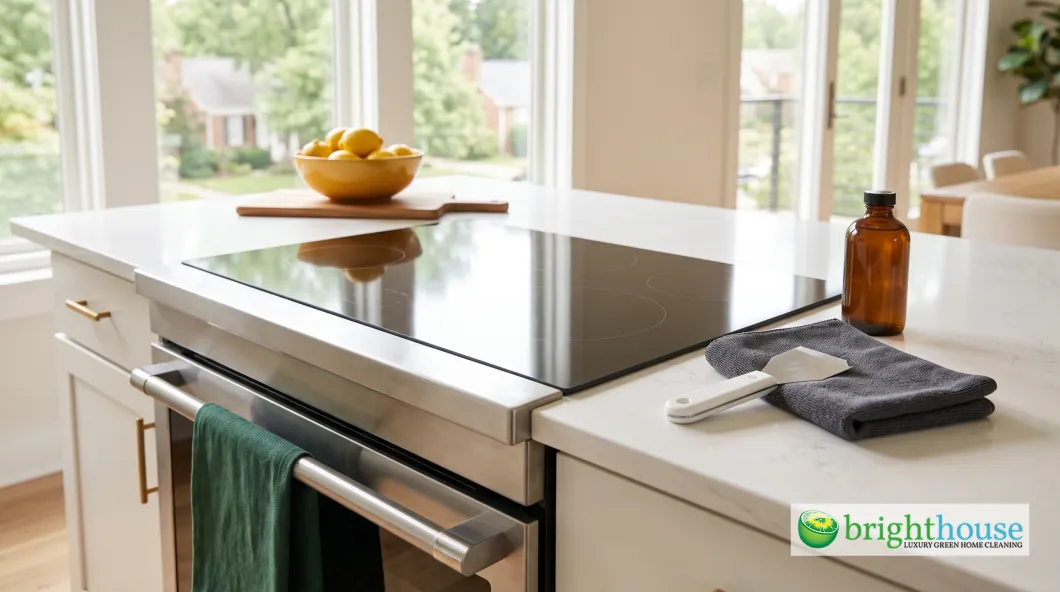
A glass stove top looks stunning in the showroom and shows everything at home. Boil-overs, grease splatter, a ring from the bottom of a pot and that one brown spot that has been there since last Thanksgiving. Black glass makes it worse, highlighting every smear and streak.
Most people’s instinct is to grab the rough side of a sponge and scrub. That is exactly what scratches the glass. The tool that sounds scary, a flat razor blade scraper, is actually what most cooktop makers recommend for burnt-on food, as long as you hold it at the right angle. This guide shows you how to clean a glass stove top safely, from daily wipes to burnt-on spills, plus the one kind of mess you should not let cool down first.
The Quick Answer
- Let it cool. Except for sugar and melted plastic, which come off best while warm.
- Wipe with a damp cloth and a drop of dish soap. Buff dry with microfiber.
- For burnt-on food, soften first. Baking soda, a little vinegar and a hot damp towel for 15 minutes.
- Scrape with a razor at a low angle. Hold the blade nearly flat against the glass.
- Finish with cooktop cream. It removes rings, metal marks and leaves a protective shine.
Why a Razor Scraper Is Safer Than a Scrubby Sponge
Glass and ceramic cooktops are hard, but they are not scratch-proof. Abrasive scrub pads, steel wool and scouring powders grind tiny scratches into the surface. Over time, those scratches dull the finish and trap more grime.
A flat, single-edge razor scraper works differently. When held at a low angle, about 30 to 45 degrees or flatter, the blade slides under burnt food and lifts it off without grinding into the glass. Many cooktop manufacturers include or recommend a scraper for exactly this reason. Use a new, sharp blade. A nicked blade can scratch.

| Safe on Glass Cooktops | Avoid |
|---|---|
| Microfiber cloths | Steel wool and metal scrubbers |
| Non-scratch sponges | The green scrubby side of sponges |
| Single-edge razor scraper, held low | Scouring powder |
| Cooktop cleaning cream | Oven cleaner |
| Baking soda paste | Ammonia glass cleaner on a warm surface |
| White vinegar and dish soap | Dirty sponges that leave film |
How to Clean a Glass Stove Top Step by Step
Daily Wipe
Once the glass has cooled, wipe it with a microfiber cloth dampened with warm water and a drop of dish soap. Then buff dry with a second cloth. That two-cloth habit takes 30 seconds and prevents most buildup. If you have just put away the dishes, the knobs and control panel deserve a quick wipe too.
Weekly Clean With Cooktop Cream
Squeeze a small amount of cooktop cleaning cream onto the cool glass. Rub it in with a non-scratch pad or paper towel in small circles, covering the whole surface. Wipe away the residue with a damp cloth and buff dry. These creams contain fine polishing agents made for glass and leave a light film that makes the next cleanup easier.
How to Clean a Burnt Glass Stove Top
For cooked-on drips, baked-on sauce and that old brown crust, soften it first, then scrape.

- Make sure the cooktop is cool. Check every burner, including the ones you did not use.
- Spray with white vinegar. Mist it over the burnt areas.
- Cover with baking soda. Sprinkle a generous, even layer over the spots. It will fizz a little.
- Lay a hot, damp towel on top. Soak a towel in hot water with a little dish soap, wring it out and lay it over the area. Leave it for 15 minutes.
- Wipe, then scrape. Remove the towel and wipe the paste with it. Hold a razor scraper nearly flat and gently push it under any remaining crust.
- Polish. Finish with cooktop cream or a mist of vinegar and a dry microfiber cloth.
For really stubborn spots, repeat the process instead of pressing harder with the scraper.
How to Clean Burnt Milk Off a Glass Stove Top
Milk boils over and leaves a brown, crusty ring. Let it cool, then use the baking soda and hot towel method. Milk proteins soften well under a damp towel. Scrape gently and finish with cooktop cream.
The Exception: Sugar and Melted Plastic
This is the one time not to wait. Sugary spills like syrup, jam or candy, and melted plastic from a bag or utensil, can bond to hot glass and pit the surface as they cool. Pits are permanent.
- Turn off the burner. Leave the pan off the spot.
- Put on an oven mitt. The glass is hot.
- Scrape while it is still soft. Use a razor scraper held at a low angle to push the sugar or plastic off the hot zone onto a cooler part of the cooktop.
- Let it cool and clean as usual. Remove what is left once everything is cool.
How to Clean Melted Plastic Off a Glass Top Stove
If plastic already hardened, let the cooktop cool fully, then gently scrape with a razor at a low angle. Some people soften hardened plastic by warming the burner on the lowest setting for a minute, then turning it off and scraping. Work carefully and check your manual first. Avoid nail polish remover and other solvents, which can damage the glass’s surface.
Rings, Stains and Burn Marks
| Mark | Likely Cause | Fix |
|---|---|---|
| White or cloudy rings | Hard water from boil-overs | White vinegar on a cloth, then cooktop cream |
| Silver or gray streaks | Aluminum or copper pans rubbing the glass | Cooktop cream with firm circles |
| Brown burn marks | Old burnt food | Baking soda and hot towel, then scrape |
| Rainbow sheen | Overheated oil or starch | Cooktop cream; avoid overheating oil |
| Small pits or chips | Sugar, a dropped pan or a scratch | Permanent; prevent with care |
How to Clean a Glass Top Stove With Vinegar
Vinegar is great for hard water rings and a streak-free finish. Mist it on the cool surface, wipe with a damp cloth and buff dry. It does not cut grease as well as dish soap, so use it after a soapy wipe, not instead of one.
How to Clean Grease Off a Glass Top Stove
Grease splatter wipes off with warm water and a few drops of dish soap on a microfiber cloth. Rinse the cloth often so you are not spreading grease around. Dry and buff, then mist with vinegar if it looks hazy. Wipe up the grease, but do not rinse it down the sink. Grease is what clogs a kitchen drain and disposal.
How to Clean a Black Glass Stove Top Without Streaks
Black glass shows every streak, so the final step matters. After cleaning, buff with a clean, dry microfiber cloth in straight lines, not circles. If you still see haze, mist lightly with a 50/50 mix of white vinegar and water and buff again. Wash your microfiber cloths without fabric softener, which leaves a film.
How to Clean an Electric Coil Stove Top
Coil burners are a different setup. The coils burn most spills off themselves. The drip pans and the surface under them hold the mess.
- Make sure the stove is off and cool. Then lift each coil and unplug it from its socket.
- Wipe the coils. Use a damp cloth with a little dish soap. Never submerge coils in water.
- Soak the drip pans. Soak them in hot soapy water for 20 minutes, then scrub with a baking soda paste. Some chrome drip pans are top-rack dishwasher safe, and can ride along when you run a full dishwasher clean. Check the manual.
- Clean under the pans. Lift the stove top, if your model allows it, and wipe away crumbs and spills.
- Dry and replace. Make sure everything is dry before you plug the coils back in.
Badly stained drip pans are inexpensive and easy to replace if cleaning does not bring them back.
Brand Notes: Whirlpool, GE, Samsung and Others
Whirlpool, GE, Samsung, Frigidaire and other brands all recommend similar care: let the surface cool, use a cooktop cleaner made for ceramic glass, a non-scratch pad, and a scraper for burnt-on food. Many manuals include a small sample of cooktop cream and a scraper with the range. If yours has specific guidance, follow it.
How to Keep a Glass Top Stove Clean
- Wipe after every use once it cools. Fresh spills come off in seconds.
- Use flat-bottomed, clean pans. Rough or dirty pan bottoms scratch and leave marks.
- Lift pans, do not slide them. Sliding causes scratches and metal streaks.
- Use cooktop cream weekly. Its light coating makes spills release more easily.
- Do not use the cooktop as a counter. Heavy items and crumbs scratch the glass.
Holiday cooking is when cooktops take the most abuse. Our post on cleaning and organizing after the holidays has ideas for the rest of the kitchen. If you would rather leave the scraping to someone else, Brighthouse is a professional home cleaning service you can trust across Nashville, Brentwood and Franklin.
For Short-Term Rental Hosts
Guests cook, spill and leave. A scratched or stained cooktop looks worn in photos and invites more careless use. That is why you need short term rental cleaners who know to scrape and polish glass at turnover rather than scrub it. Brighthouse’s between-guest housekeeping keeps the kitchen looking new.
Frequently Asked Questions
What is the best way to clean a glass stove top?
Wipe with a damp microfiber cloth and dish soap once cool, use cooktop cream weekly, and remove burnt-on food with baking soda, a hot towel and a razor scraper held at a low angle.
Will a razor blade scratch a glass stove top?
Not when held nearly flat and used with a new, sharp blade on a clean surface. That is why many manufacturers recommend it.
Can I use baking soda on a glass stove top?
Yes. Baking soda with a little vinegar and a hot damp towel softens burnt-on food without scratching.
How do you get burn marks off a glass top stove?
Soften them with baking soda and a hot towel for 15 minutes, scrape gently with a razor at a low angle, then polish with cooktop cream.
Can I use Windex on my glass stove top?
It is better to use a cleaner made for glass cooktops. Ammonia glass cleaners can leave streaks and should never go on a warm surface.
How do I clean melted plastic off a glass top stove?
If it is still warm, turn off the burner and scrape it off with a razor scraper while wearing an oven mitt. If it has hardened, let it cool and scrape gently.
The Bottom Line
Cleaning a glass stove top is about gentleness and timing. Let it cool, soften burnt-on messes with baking soda and a hot towel, scrape with a razor held low and finish with cooktop cream. Skip abrasive pads entirely. The one exception is sugar and melted plastic, which you remove carefully while the glass is still warm.
If you do not have a cooktop scraper and a tube of cooktop cream, add them to your shopping list this week. They are inexpensive and make every cleanup faster.
A gleaming cooktop makes the whole kitchen look finished.


