
An area rug ties a room together, but it also takes the brunt of the room’s foot traffic. It collects crumbs under the coffee table, pet hair by the couch and the occasional spill nobody saw happen. Unlike wall-to-wall carpet, a rug can come up and go outside, which makes a deep clean easier, if you know what it is made of.
That is the part people skip. The fiber decides whether water is your friend or your rug’s worst enemy. A polypropylene rug can be hosed down on the driveway. A jute rug can turn brown from a glass of water. A viscose rug that looks like silk can be ruined by the gentlest scrub. This guide shows you how to clean a rug at home by material, how to treat stains safely and when to call a professional.
The Quick Answer
- Check the label on the back. It lists the fiber and care instructions.
- Vacuum both sides. Then shake small rugs outdoors.
- Spot clean with the right method for the fiber. Soap and water for synthetics, wool-safe cleaner for wool, very little moisture for natural plant fibers.
- Deep clean synthetic and cotton rugs at home. Hose and scrub outdoors or machine wash small ones.
- Send silk, viscose and valuable hand-knotted rugs to a pro. Water can ruin them.
First, Identify Your Rug’s Fiber
Flip the rug and look for a tag on the back. If there is none, a few clues help. Synthetic rugs feel slick or plasticky and are often the most affordable. Wool feels springy and slightly coarse and resists flattening. Cotton feels soft and flat. Jute and sisal feel rough and look like rope. Silk and viscose have a strong sheen. Hand-knotted rugs show the same pattern on the back as the front.

How to Clean an Area Rug at Home
Every rug starts the same way: get the dry dirt out first. Grit wears fibers down and turns into mud when it gets wet.
- Vacuum the top. Go slowly in both directions. Turn off the beater bar on wool, shag and hand-knotted rugs.
- Flip and vacuum the back. Vacuuming the underside shakes grit loose from the base of the fibers.
- Vacuum the floor under it. Dirt sifts through.
- Shake or beat small rugs outside. Drape a rug over a railing and beat it with a broom handle or a rug beater to release deep dust.
How to Clean a Rug Without a Vacuum
Take it outside, shake it hard, then beat it over a railing or fence. A stiff broom swept firmly in one direction lifts surprisingly much grit. For pet hair, drag a damp rubber glove across the surface. Sprinkle baking soda, brush it in, wait 30 minutes, then shake or sweep it out to freshen the rug.
How to Clean an Area Rug Without Moving It
For a big rug under heavy furniture, vacuum well, then spot clean or surface clean in sections with the method for its fiber. Put a towel or plastic sheet under any section you clean with liquid if the floor beneath is wood. A hand-held upholstery extractor works well on synthetic rugs that stay in place.
How to Clean Rugs by Material
Synthetic Rugs: Polypropylene, Nylon and Polyester
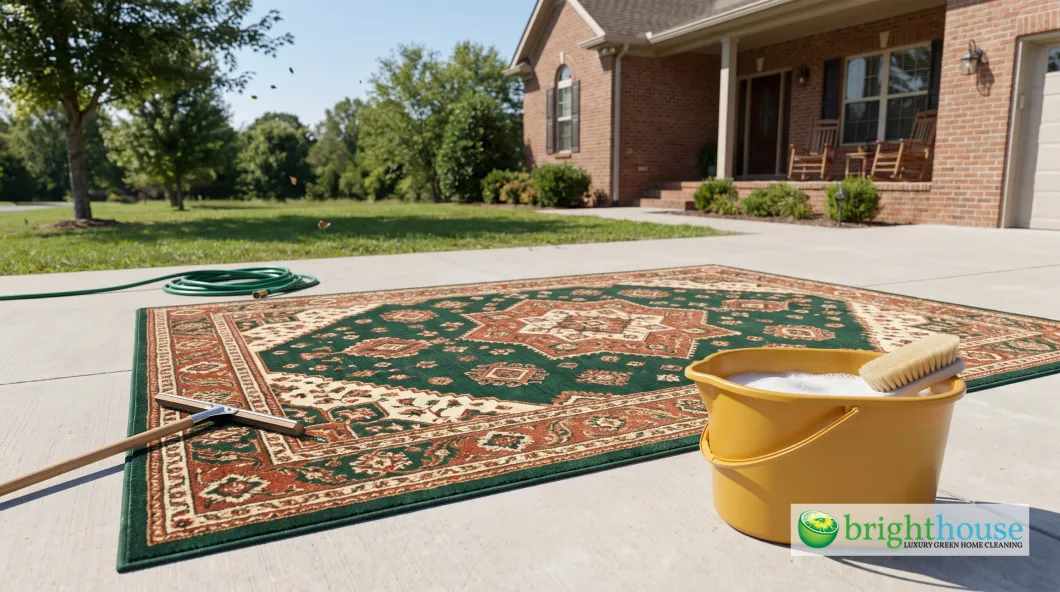
Synthetic rugs are the most forgiving. They can handle water and mild soap, and many indoor-outdoor rugs are polypropylene. For a deep clean, take the rug outside on a dry day.
- Shake and vacuum it. Both sides.
- Lay it on a clean, hard surface. A swept driveway, patio or deck works.
- Wet it with a hose. A light, even soak.
- Scrub with soapy water. Mix a few squirts of dish soap or a rug shampoo in a bucket of water and scrub with a soft brush in the direction of the pile.
- Rinse thoroughly. Keep rinsing until no suds run off.
- Squeegee and dry. Push water out with a window squeegee, then drape the rug over a railing or chairs. Flip it so both sides dry completely.
How to Clean a Wool Rug at Home
Wool is durable and naturally resists stains, but it does not like heat, strong alkaline cleaners or soaking. Vacuum regularly with the beater bar off. To spot clean a wool rug, blot spills right away, then dab with a cool-water solution of a wool-safe, pH-neutral detergent. Blot with a clean white towel, rinse by blotting with cool water and dry quickly with a fan. Skip bleach, ammonia and oxygen bleach, which can damage wool fibers and dyes. For a full cleaning of a large wool rug, a professional rug cleaner is the safest choice.
Cotton, Throw Rugs and Braided Rugs
Many small cotton and flatweave rugs can go in the washing machine on a gentle, cold or warm cycle. Check the tag. Larger cotton rugs can be cleaned like synthetic rugs outdoors. Braided rugs should be checked for loose or broken stitching first, since washing can split them apart. Wash small braided rugs on gentle in a front-loader, or spot clean larger ones and dry them flat.
Jute and Sisal Rugs
Natural plant fibers absorb water and can turn brown, shrink or grow mildew. Vacuum often. For spills, blot immediately and dab with a barely damp cloth or a little club soda, then dry fast with a fan or hair dryer on cool. Never soak, hose or steam these rugs.
How to Clean a Silk or Viscose Rug
Silk and viscose rugs are beautiful and very delicate. Viscose, sometimes sold as art silk or bamboo silk, is especially sensitive. Water can make it yellow, lose its shine, or permanently flatten. Vacuum gently with suction only, no beater bar. Blot spills with a dry white towel only. For anything more, call a professional rug cleaner who works with these fibers.
How to Clean Oriental and Persian Rugs at Home
Hand-knotted oriental and Persian rugs, especially antiques, can last generations with gentle care. Vacuum them regularly with suction only, moving with the pile. Turn them a few times a year so they wear evenly. Flip the rug and vacuum the back occasionally. Blot spills fast with cool water and a wool-safe cleaner, testing for dye bleeding first. Do not vacuum the fringe; it tangles. Have valuable rugs professionally washed every few years.
How to Clean Sheepskin Rugs
Shake sheepskin out and brush it with a wide-tooth comb or a wire pet brush to keep the wool from matting. Spot clean with cool water and a wool-safe detergent. Small sheepskin rugs can often be hand-washed in cool water with a wool wash, rinsed gently and dried flat in the shade, away from heat. Brush it again while it is still slightly damp to fluff the wool. Never put real sheepskin in a hot dryer.
Shag, Fluffy and High Pile Rugs
Long fibers trap debris deep down. Shake the rug outside often. Vacuum with the beater bar off or raised, or use a suction-only attachment. To deep clean a shag rug, spot clean with mild soap and water, blotting well, and dry it thoroughly. Fluffy faux fur rugs can sometimes be hand-washed in cool water. Check the label.
Bathroom Rugs, Washable Rugs and Outdoor Rugs
How to Clean Bathroom Rugs
Bath rugs soak up water and grow mildew fast, so wash them weekly. Most go in the washing machine on cold or warm with regular detergent. Rugs with rubber or latex backing should be washed on gentle and air dried or tumbled on low. High heat cracks the backing. If a bath rug smells musty even after washing, it is time to replace it.
How to Clean a Ruggable Rug
Washable rug systems like Ruggable have a thin rug cover that separates from a nonslip pad. Peel the cover off the pad, wash it according to the brand’s care instructions, usually cold and gentle, and air dry or tumble on low. Wipe the pad with a damp cloth.
How to Clean an Indoor Outdoor Rug
Most indoor-outdoor rugs are polypropylene, so hose them down and scrub with soapy water using the outdoor method above. For mildew spots, a mix of 1 part white vinegar to 1 part water sprayed on, left for 15 minutes and scrubbed works well. Dry fully on both sides before rolling or storing it.
How to Clean Rug Stains
| Stain | Synthetic or Cotton | Wool | Jute, Silk, Viscose |
|---|---|---|---|
| Food or drink | Dish soap and water, blot, rinse | Wool-safe detergent in cool water, blot | Blot dry only, call a pro |
| Coffee or tea | Dish soap and vinegar mix, blot | Wool-safe cleaner, blot, rinse | Blot dry, club soda on jute |
| Mud | Let dry, vacuum, then soap and water | Let dry, vacuum, then blot | Let dry, vacuum gently |
| Pet urine | Enzyme cleaner | Enzyme cleaner labeled wool safe | Blot, call a pro |
| Vomit | Scrape, baking soda, enzyme cleaner | Scrape, blot, wool-safe enzyme | Scrape, blot, call a pro |
Always blot from the outside in and test a hidden corner first. Rubbing frays fibers and spreads the stain.
For pet accidents, our guide to cleaning pet urine from rugs and carpet explains how to treat both sides of the rug and the floor beneath it.
Can You Clean Rugs With Vinegar?
On synthetic and cotton rugs, a 1-to-1 mix of white vinegar and water helps with odors and light stains. Rinse it out afterward. Skip vinegar on wool, silk and viscose, and test it on dyed rugs to make sure colors do not bleed.
Protect the Floor Underneath
Rugs often sit on hardwood. Before you put a cleaned rug back, make sure it is completely dry. A damp rug can leave white marks or warp wood. Check the floor under the rug while it is up, and give it the gentle routine for cleaning hardwood without water damage. Clean the rug pad too: vacuum it, wipe or hose it if the material allows, and let it dry.
Using a rented carpet cleaning machine on a synthetic rug? The same technique for getting carpet clean without leftover soap applies: less solution, more dry passes, and a plain water rinse.
How Often to Clean Rugs
| Task | How Often |
|---|---|
| Vacuum high-traffic rugs | Weekly, more with pets |
| Vacuum the back and the floor underneath | Monthly |
| Rotate the rug | Every 3 to 6 months |
| Wash bath rugs | Weekly |
| Deep clean synthetic and cotton rugs | Once or twice a year |
| Professional cleaning for wool and hand-knotted rugs | Every 1 to 3 years |
Spring and fall are good times to take rugs outside for a deep clean. Add it to your spring cleaning checklist. If you want the rest of the house handled while the rugs dry, Brighthouse aims to be the best home cleaning company in your area for Nashville, Brentwood and Franklin families, and our local home cleaning company team is easy to book.
For Short-Term Rental Hosts
Rental rugs should be durable and easy to clean. Synthetic and washable rugs are the smart choice. When you are finding the best short term rental cleaner, ask whether they spot treat rugs and wash bath mats at every turnover.
Frequently Asked Questions
How do you deep clean a rug at home?
Vacuum both sides, then for synthetic and cotton rugs, hose and scrub outdoors with mild soapy water, rinse well, squeegee and dry fully. Wool and delicate rugs need gentler methods or a professional.
Can I wash an area rug in the washing machine?
Small cotton, synthetic and bath rugs often can, on a gentle cycle. Check the label. Large, wool, jute, silk and viscose rugs should not.
How do you clean a wool rug without damaging it?
Vacuum with the beater bar off, blot spills and spot clean with a cool, wool-safe, pH-neutral detergent. Avoid bleach and soaking, and dry quickly.
Why did my jute rug turn brown after cleaning?
Jute absorbs water and releases natural tannins, causing browning. Use as little moisture as possible and dry it fast.
How do you clean a rug without a vacuum?
Shake it, beat it over a railing, sweep it firmly with a stiff broom and use a damp rubber glove for pet hair.
Should I clean a viscose rug myself?
It is safest not to. Viscose is very sensitive to water. Vacuum gently, blot spills dry and call a professional for stains.
The Bottom Line
How you clean a rug depends on what it is made of. Synthetic and cotton rugs can handle soap and water. Wool needs cool water and wool-safe cleaners. Jute, sisal, silk and viscose need almost no water at all. Vacuum often, blot spills, dry everything completely, and leave valuable or delicate rugs to a professional.
Flip your biggest rug this week and read the label. Once you know the fiber, you will know whether it is a driveway rug or a call-the-pros rug.
A clean rug makes a whole room feel fresh, and it protects the floor underneath for years.


