Nobody loves cleaning the toilet. Most of us give the bowl a quick swish with the brush, wipe the seat, flush and call it done. And for a day or two, it looks fine. Then the ring comes back, a faint smell lingers, and there is a crust you cannot quite reach.
That is because the real grime is not in the bowl you can see. It is under the rim, in the small holes that rinse the bowl with every flush, behind the seat hinges and along the caulk line where the toilet meets the floor. This guide shows you how to clean a toilet properly, from the hidden spots to the stubborn stains, in about ten minutes a week.
The Quick Answer
- Put bowl cleaner under the rim first. Let it sit while you clean the rest.
- Clean from top to bottom. Tank lid, handle, tank, seat, hinges, then the outside of the bowl and the base.
- Scrub the bowl last. Get under the rim and into the hole at the bottom.
- Let disinfectant sit. Most need several minutes of wet contact to kill germs. Check the label.
- Treat stains by type. Vinegar for hard water, an oxalic acid cleaner for rust.
One Safety Rule Before You Start
Never mix toilet cleaners. Many bowl cleaners contain acids to dissolve stains. Mixed with bleach, they release chlorine gas, and in a small bathroom with the door closed, that is dangerous. Ammonia and bleach are another toxic combination. Pick one product, use it, flush, and only then switch to another. Open a window or run the exhaust fan while you work. The same rule applies everywhere in the house, including when you deep clean the washer.
How to Clean a Toilet Step by Step
Gather your supplies first: a toilet brush, rubber gloves, a toilet bowl cleaner, a disinfecting spray or wipes, a few microfiber cloths or paper towels, and an old toothbrush. Keep a separate cloth just for the toilet so germs do not travel to the sink.
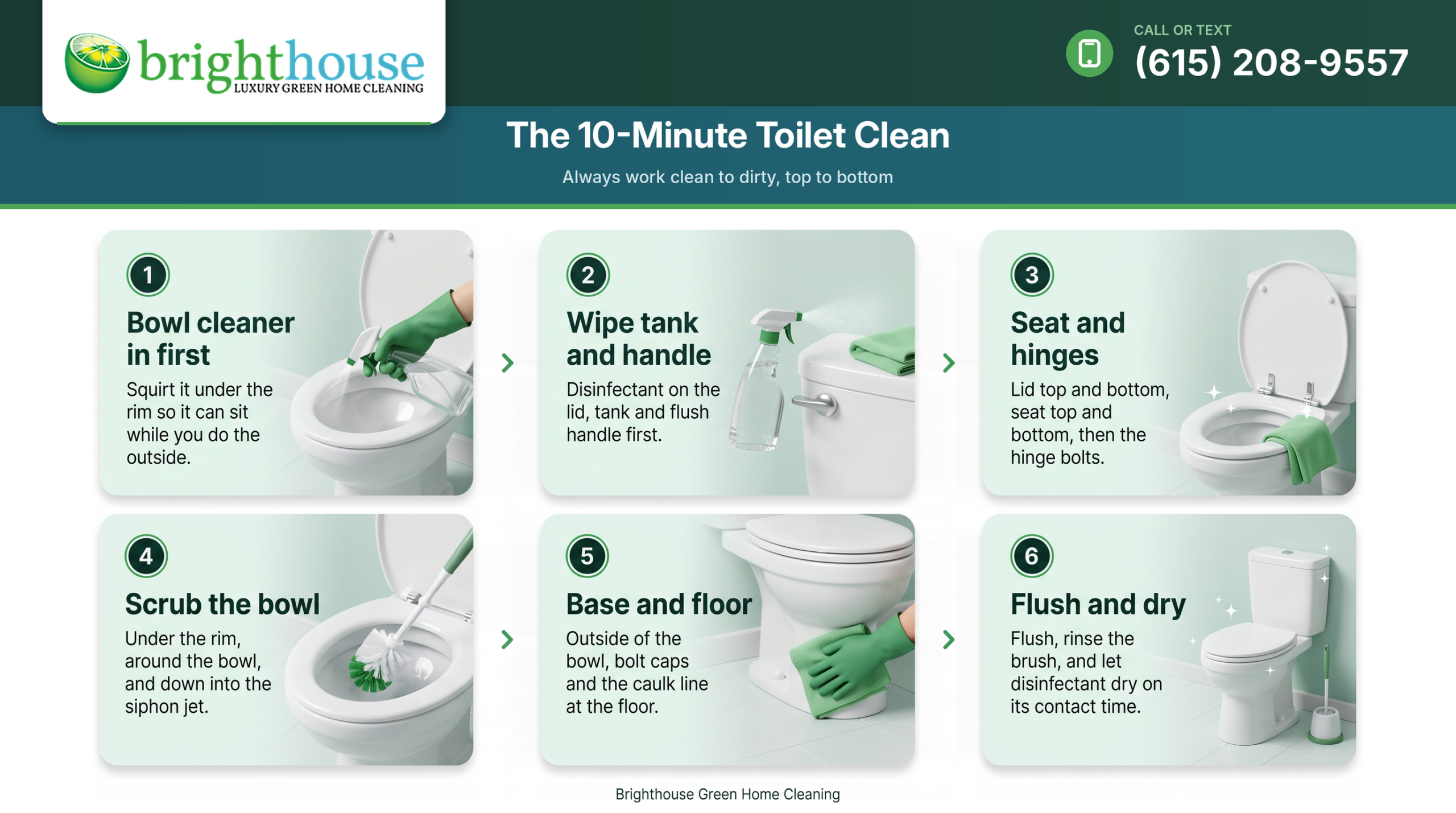
- Apply bowl cleaner under the rim. Lift the seat and squirt the cleaner all the way around under the rim so it runs down the sides. Let it sit.
- Spray and wipe the tank and handle. Start at the top. The flush handle is one of the most touched spots in the house, right up there on any list of sanitizing high-touch areas.
- Clean the lid and seat. Spray the top of the lid, both sides of the seat and the underside of the seat, where splashes collect. Wipe with a clean cloth.
- Clean the hinges. Use an old toothbrush dipped in disinfectant around the hinge bolts and under any plastic hinge caps. Pop the caps open if you can.
- Scrub the bowl. Work the brush under the rim in a circle, then down the sides. Push the brush into the hole at the bottom a few times.
- Clean the outside and base. Wipe the outside of the bowl, the bolt caps at the base and the floor right around the toilet. Use a fresh cloth or paper towel.
- Flush and let it dry. Flush with the lid closed. Rinse the brush in the clean water and let it drip dry before it goes back in its holder.
How to Clean a Toilet With Vinegar and Baking Soda
For a gentler, low-fume clean, pour 1 cup of white vinegar into the bowl and sprinkle 1/2 cup of baking soda on top. It will fizz. Let it sit for 10 to 15 minutes, then scrub and flush. This handles light stains and odor well. It does not disinfect as strongly as a labeled disinfectant, so on a toilet that someone has been sick on, follow up with a disinfecting cleaner and let it sit the full contact time.
How to Clean a Toilet Without a Brush
No brush? Wear long rubber gloves and use a disposable scrub sponge or a wad of paper towels with bowl cleaner. A pumice stick or an old toothbrush works on the rim. Throw the sponge away afterward rather than reusing it.
How to Clean Under the Toilet Rim
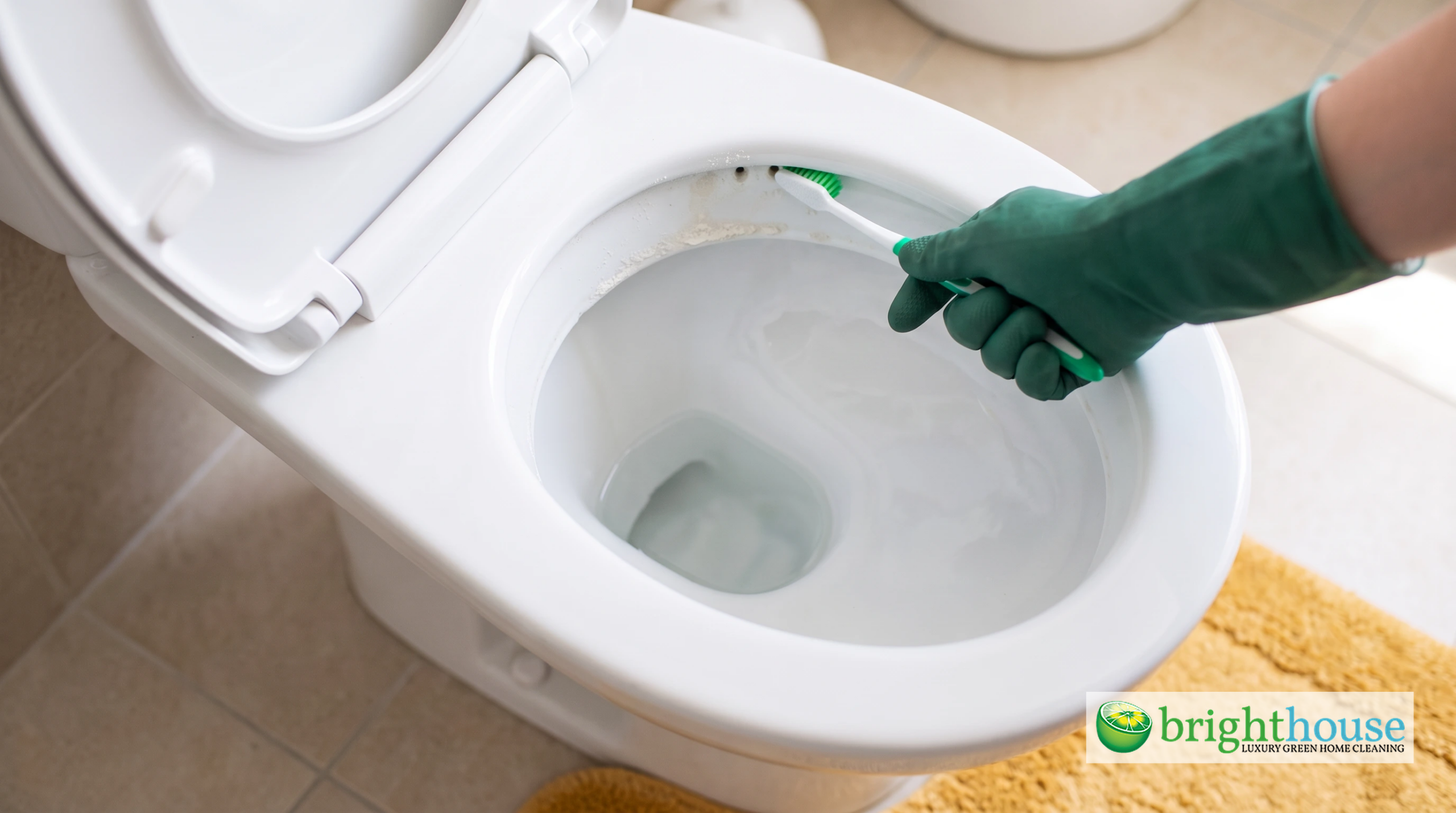
Lift the seat and look under the rim with a small hand mirror or your phone’s camera. You will see a ring of small holes. Every flush pushes water out through them to rinse the bowl. When minerals clog them, the bowl stops rinsing evenly, and stains and odor build up in the dead spots.
How to Clean Toilet Jets and the Siphon Jet
The siphon jet is the larger hole at the bottom front of the bowl. It shoots water into the drain to start the flush. A clogged siphon jet causes weak, slow flushes.
- Warm 1 to 2 cups of white vinegar. Warm, not boiling.
- Pour it into the overflow tube. Lift the tank lid. The overflow tube is the open pipe in the middle. Vinegar poured here flows directly to the rim jets and the siphon jet.
- Wait an hour. Do not flush. Let the vinegar soften the scale.
- Poke the holes clear. Use a small stiff brush, an old toothbrush or a bent piece of wire to clear each rim hole and the siphon jet.
- Flush a few times. The flush should feel stronger and the bowl should rinse more evenly.
How to Clean Stubborn Toilet Stains
How to Empty a Toilet Bowl for Cleaning
Stains below the waterline are easier to treat in a dry bowl. Turn the water supply valve behind the toilet clockwise to shut it off. Flush, and hold the handle down to drain as much as possible. Push the remaining water down the drain with a toilet plunger, or sponge it out into a bucket. Now cleaners can sit on the stain without being diluted.
Hard Water Rings and Limescale
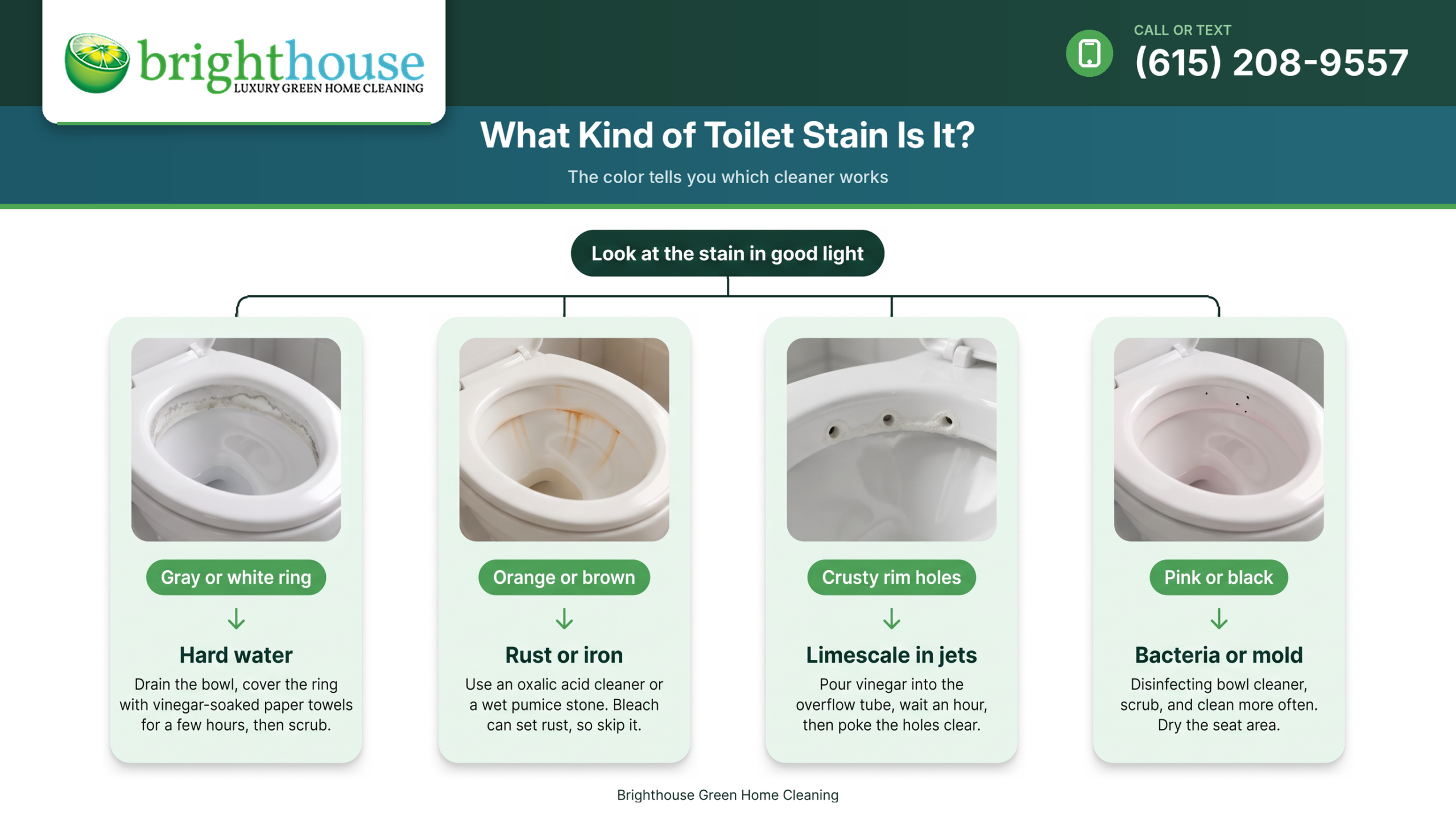
A gray, white or tan ring at the waterline is mineral buildup. With the bowl drained, lay paper towels over the ring and soak them with white vinegar. Leave them for a few hours or overnight. Then scrub with the brush or a wet pumice stone and turn the water back on. For thick limescale, a cleaner labeled for limescale or one with citric acid works faster.
How to Clean a Rusty Toilet Bowl
Orange and brown streaks come from iron in your water or old pipes. Bleach can make rust stains darker and harder to remove, so leave it out. Use a cleaner with oxalic acid, like Bar Keepers Friend, made into a paste, or a rust remover rated for porcelain. Let it sit, then scrub. A pumice stone also works on white porcelain, as long as both the stone and the porcelain stay wet the whole time. A dry pumice will scratch.
| Stain | Cause | Best Fix | Avoid |
|---|---|---|---|
| Gray or white ring | Hard water minerals | Drain the bowl, vinegar-soaked paper towels, then scrub | Steel wool |
| Orange or brown streaks | Iron or rust | Oxalic acid cleaner or wet pumice | Bleach |
| Crusty rim holes | Limescale | Warm vinegar in the overflow tube, then poke holes clear | Sharp metal tools that chip porcelain |
| Pink film | Airborne bacteria | Disinfecting cleaner, clean more often | Letting it sit for weeks |
| Black specks | Mold or mildew | Disinfecting bowl cleaner, good ventilation | Mixing bleach with acid cleaners |
| Yellow under the seat | Urine splashes | Baking soda paste, then disinfectant | Abrasive pads on plastic |
Pumice is safe only on wet, white vitreous china. Skip it on colored toilets and plastic seats.
How to Clean a Really Dirty Toilet
For a neglected toilet, as in a move-in or a rarely used guest bath, take it in stages. Drain the bowl. Apply a strong bowl cleaner or the vinegar soak and give it an hour. Scrub, then treat what is left by stain type. Clean the rim jets with the vinegar method. Do the seat, hinges and base with disinfectant. It may take two rounds, but most toilets come back looking close to new.
How to Clean a Toilet Seat
The seat is the part you actually touch, so it deserves the most attention. The right method depends on what it is made of.
- Plastic seats. These handle disinfectant sprays and wipes well. For yellow urine stains, apply a paste of baking soda and water, let it sit 10 minutes and wipe. Skip abrasive scrub pads, which leave scratches that trap grime.
- Wooden seats. Painted or varnished wood can crack and peel if it stays wet. Wipe with warm water and a drop of dish soap, then disinfect with a spray that is safe on wood finishes and dry it right away. Avoid bleach and soaking.
- Soft or padded seats. Wipe gently with mild soap. Once they crack, they cannot really be cleaned and are best replaced.
How to Clean Toilet Seat Hinges
Grime hides around the hinge bolts and under the plastic caps. Many newer seats have quick-release or lift-off hinges: press a button or lift the seat at an angle and it comes off, so you can clean the hinge area and the underside of the seat easily. If yours does not come off, flip open the caps and scrub the bolts with an old toothbrush and disinfectant.
Don’t Forget the Base and Caulk
The caulk line where the toilet meets the floor collects drips and dust and can turn yellow or black. Scrub it with an old toothbrush and a disinfecting spray, then wipe it dry. If the caulk is cracked, peeling or stays stained after cleaning, it is time to remove it and re-caulk. Wipe the wall behind the toilet too, using the gentle approach for washing painted bathroom walls.
How Often to Clean a Toilet, and How to Keep It Clean Longer
| Task | How Often |
|---|---|
| Quick brush and seat wipe | 2 to 3 times a week in busy bathrooms |
| Full top-to-bottom clean | Weekly |
| Rim jet and siphon jet vinegar soak | Every 1 to 3 months, more with hard water |
| Hinges and base caulk | Every 2 weeks |
| Replace the toilet brush | Every 6 months |
- Keep a brush and spray in every bathroom. A 30-second swish every other day stops rings from forming.
- Close the lid to flush. It keeps spray from landing on nearby surfaces.
- Run the fan. Moisture feeds the pink film and mildew.
- Use a rim block or tank tablet carefully. Some tank tablets with bleach can wear down rubber parts in the tank. Check your toilet maker’s guidance.
If bathrooms are the chore you put off longest, Brighthouse can help. We offer cleaning your home with expert services, including the deep bathroom details like rim jets and caulk lines, and routine household upkeep for families across Nashville, Brentwood and Franklin.
For Short-Term Rental Hosts
Guests check the bathroom first, and the toilet is the first thing they look at. A faint ring or a grimy hinge can show up in a review. Short term vacation rental cleaners clean every toilet top to bottom at each turnover and keep the hidden spots from building up between stays. When you are ready to hire Airbnb cleaner help for your listing, we can handle every turnover.
Frequently Asked Questions
What is the best way to clean a toilet?
Put bowl cleaner under the rim, clean the tank, seat, hinges and base from top to bottom, then scrub the bowl and flush. Let disinfectant sit for its full contact time.
How do you get rid of the brown ring in a toilet?
Drain the bowl, cover the ring with paper towels soaked in white vinegar for a few hours, then scrub. If it is orange or rust colored, use an oxalic acid cleaner instead.
Can I use vinegar and baking soda to clean a toilet?
Yes. One cup of vinegar and half a cup of baking soda, left for 10 to 15 minutes, handles light stains and odors. Use a disinfectant when germs are a concern.
How do I clean the holes under the toilet rim?
Pour warm white vinegar into the overflow tube in the tank, wait an hour, then poke each hole clear with a small brush or bent wire and flush.
Will a pumice stone scratch my toilet?
Not on white porcelain if both the stone and the bowl stay wet. Do not use it on colored toilets, plastic seats or dry surfaces.
How often should you clean a toilet?
A full clean once a week, with quick brush-and-wipe touch-ups a few times a week in busy bathrooms.
The Bottom Line
A toilet looks clean when the bowl is white, but it is clean when the rim jets, siphon jet, seat hinges and base are clean too. Work from top to bottom, let disinfectant sit, never mix cleaners, and treat stains by what caused them.
This week, grab a mirror and look under your rim. If the holes are crusty, pour a cup of warm vinegar into the overflow tube and give it an hour.
It is the least glamorous chore in the house, and one of the most satisfying when it is done right.